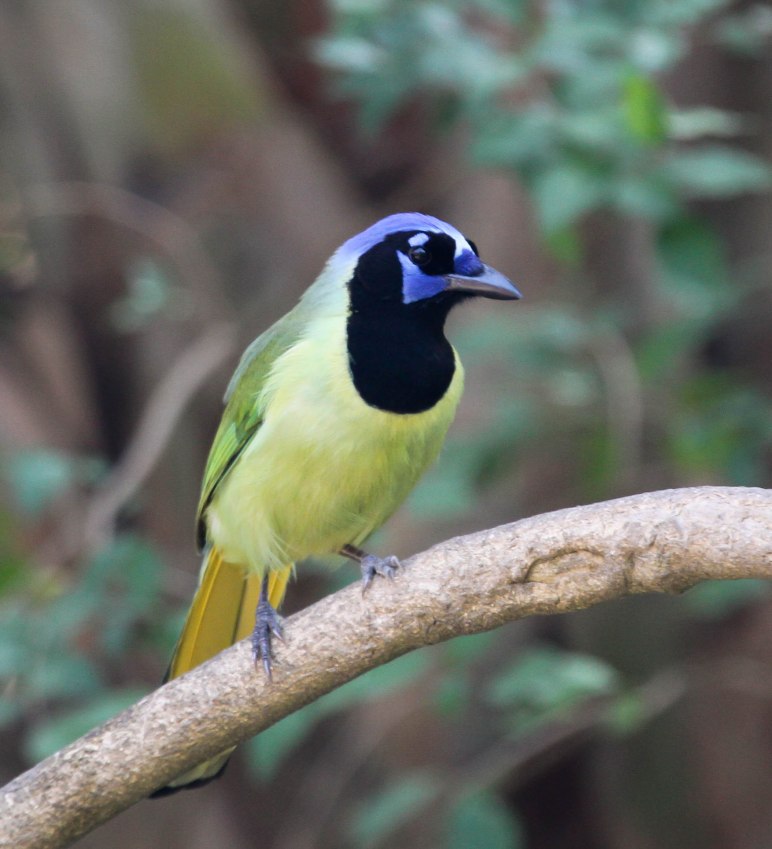
Continuing a great trend of Eagle-Eye runs to southern Texas, this year’s trip one of the most exciting tours I’ve led yet! We were continually treated to the rich diversity and abundance of birds that inhabit South Texas during the winter season. Our travels took us from the salt marshes and shorelines of the Corpus/Rockport area down to the austere coastal plain of Brownsville, then into the delightfully birdy preserves of the Lower Rio Grande Valley, and headed westward into the outskirts of the Chihuahuan Desert in the Falcon Dam region. We ended up tallying in an impressive 217 species of birds, many of them specialties of South Texas like Whooping Cranes; subtropical forest birds like Chachalacas, Green Jays, Altamira Orioles and Great Kiskadees; with desert species like Greater Roadrunner, and Pyrrhuloxia; plus raptors, waders & shorebirds galore and an amazing list of rarities like Common Black Hawk, Crimson-collared Grosbeak, Hook-billed Kite, Golden-crowned Warbler and Roadside Hawk!
Day 1, February 12: Corpus Christi
We began our tour with a meet and greet with most everyone (one couple got in late) at a great dinner spot in Corpus. We got to know each other over tasty seafood and sketch out what we would be doing for the tour. Excitement was high, and we were all eager for the morning to come and starting lifting our binoculars!
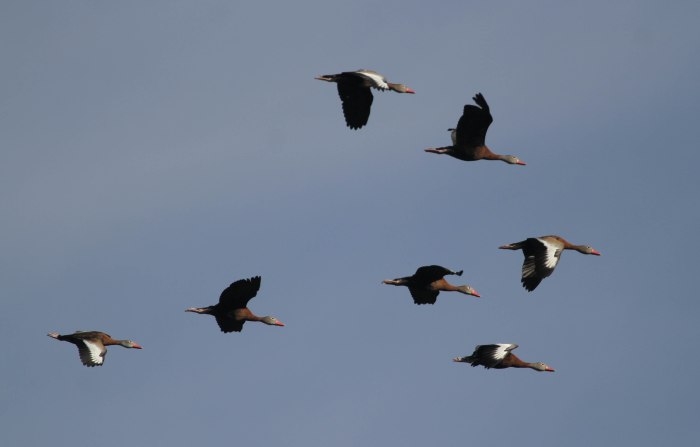 Black-bellied Whistling-Ducks
Day 2, February 13: Corpus Christi to Rockport
After breakfast at our hotel, we headed out to start birding a local park shortly after sunrise. With a diverse assemblage of avian species, Hazel Bazemore is a fantastic starter plate to South Texas birding. The park is full of wintering songbirds and waders, as well as raptors, ducks and a mix of the first “valley specialties”. In a little over two hours we racked up 57 species including Black-bellied Whistling Ducks, Black-necked Stilts, White Ibis, Crested Caracaras, Vermilion Flycatcher, Sedge Wrens and singing Olive Sparrows and Long-billed Thrashers.
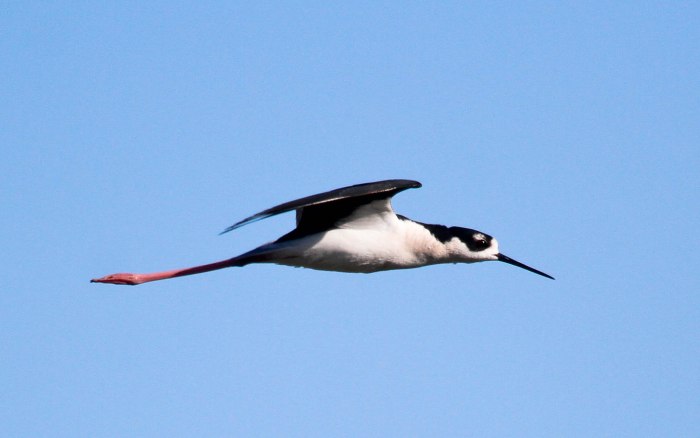 Black-necked Stilt
Next up was the tidal mudflats of Indian Point. Full of shorebirds, we saw sixteen species, including both species of Dowitchers, Black-bellied & Semipalmated Plovers, Western Sandpipers, American Oystercatchers and an American Avocet as well as our first decent rarity of the trip, a flock of four Wilson’s Plovers.
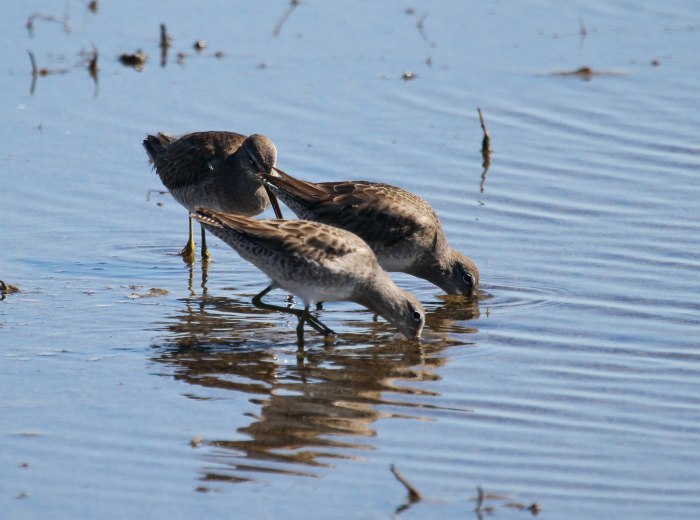 Long-billed Dowitchers in the rear, with a Short-billed Dowitcher in the front. Note who the slimmer profile with a paler plumage separates the Short-billed from its larger sister species.
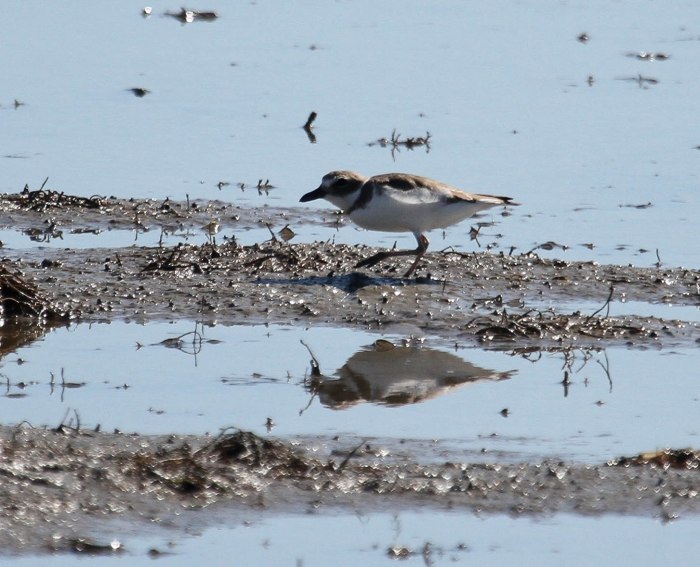 Wilson’s Plover
We then headed up to the Rockport area, where we had a picnic lunch at Goose Island State Park. We took a walk around the trails and campground at the State park to stretch our legs, looking for songbirds, finding Orange-crowned Warblers, Gray Catbird and our only Field Sparrows of the trip. Moving on to the pastures around the Big Tree (an ancient Live Oak), we had our first looks at a few Whooping Cranes across a field! Also notable was a lone dark Ibis I snapped a few pictures of, and later in looking at my photos, confirmed my suspicions from the time that it was a Glossy Ibis as opposed to the more expected White-faced Ibis! We spent our last few hours of daylight cruising around the salt marshes of Cape Valero getting great looks at Roseate Spoonbills, White-faced Ibis, Little Blue Herons and were treated to a Clapper Rail lurking in a culvert next to the road!


Glossy Ibis in the right-hand photo, with White-faced Ibis to the left (along with Roseate Spoonbill and Snowy Egret). Note the dark eye and dark facial skin of the Glossy Ibis compared to the red eye and pink facial skin of the White-faced Ibis.
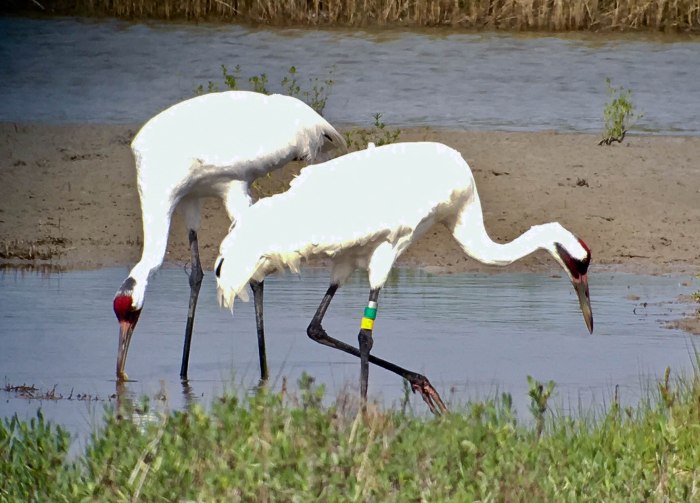 Whooping Cranes
Day 3, February 14: Rockport to Brownsville
One of my most favorite days of the year is taking Captain Tommy’s boat the Skimmer into the inter-coastal marshes of Aransas National Wildlife Refuge to see the most magnificent of all Texas birds- the Whooping Crane. Standing at five feet tall, this impressive-looking beast is still one of the more critically endangered birds on the planet. And we were lucky enough to see 45 of them! Certainly the highest day total I’ve ever had of this striking species! But the Whoopers aren’t the only birds we saw. We enjoyed a Great Blue Heron rookery en route to the docks that morning, and from the boat, tons of ducks; huge smears of Lesser Scaup seen on the open waters of Copano Bay, with big flocks of Blue-winged Teal and Gadwall in the marshes. Our first Reddish Egrets of the trip along with several Common Loons and Eared Grebes were seen and our only Horned Grebe, Marbled Godwit, Common Goldeneye and surprisingly Royal Tern of the tour were had. Very exciting were the numerous pods of Bottlenose Dolphins that came and rode in our boat’s wake.
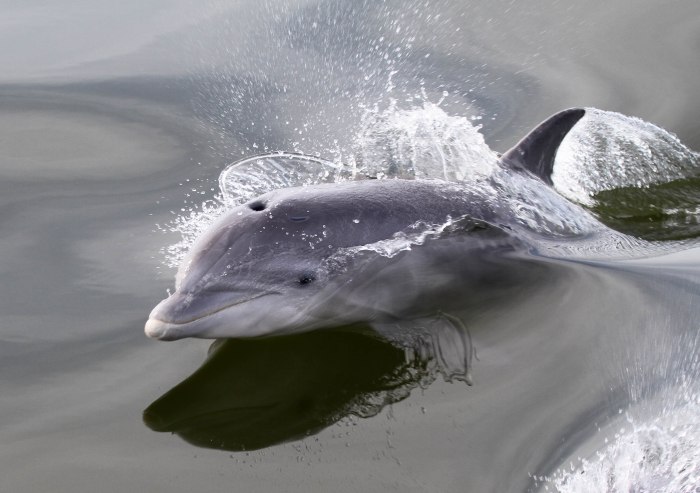 Atlantic Bottlenose Dolphin
After our picnic lunch in Rockport, we headed into the van for the afternoon drive down to Brownsville. The highway was lined in Red-tailed Hawks, Caracaras and a handful of our first Harris’s Hawks. Two quick birding stops on our route included our first visuals on Green Jays and Black-crested Titmice at the Sarita rest area, and a ranch along the highway held a large flock of Snow Geese with a few Ross’s Geese contained within. We got to Brownsville just as the shadows were growing long and after a brief check-in to our hotel, headed to Oliveira Park for an evening spectacle supreme- the night roost of the flocks of parrots that roam Brownsville. A parrot roost is in short, pure pandemonium in action! With shrieking cries and swooping explosive flights, flocks gather in the large eucalyptus trees. The most abundant bird is the native species Red-crowned Parrot, with additional feral species present like Red-lored Parrot, Lilac-crowned Parrot and White-fronted Parrots. A most memorable event to experience!
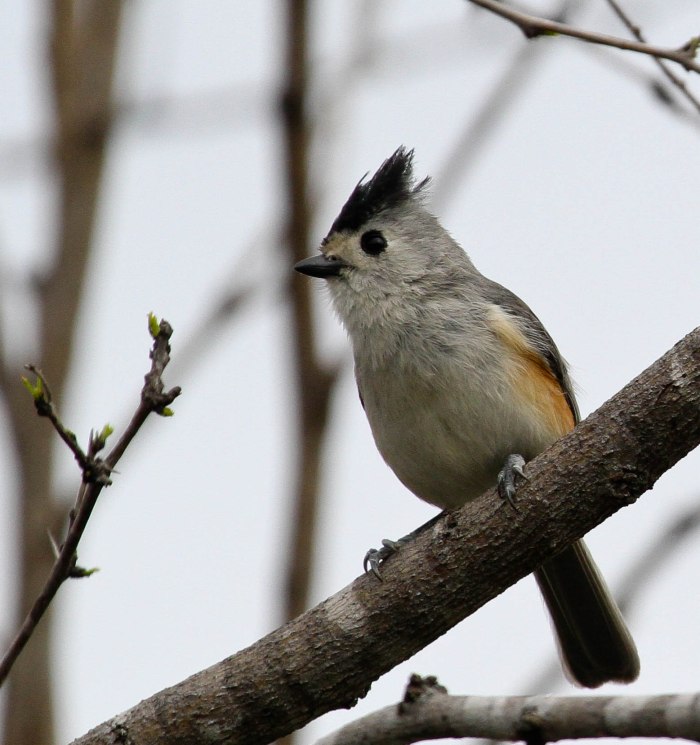 Black-crested Titmouse
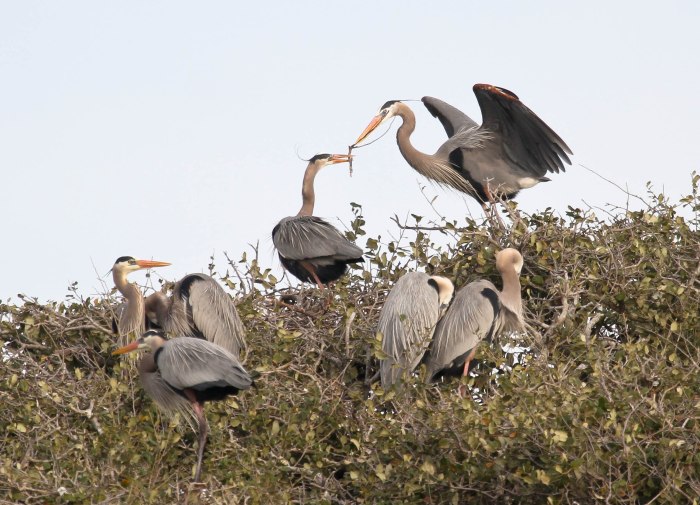 Great Blue Heron rookery
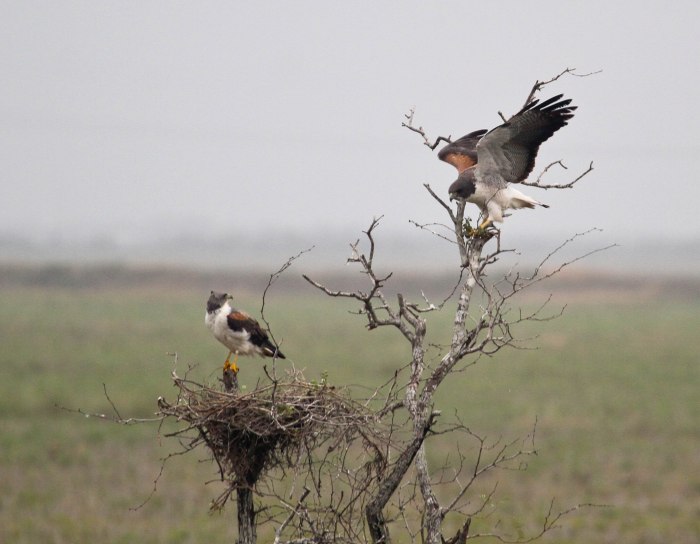 White-tailed Hawks
Day 4, February 15: Brownsville
We started our morning in Brownsville by slinking along the Old Isabel Port Road in search of Aplomado Falcons. Right off the bat we had a pair of White-tailed Hawks engaged in nest-building right along the road! Tropical Kingbirds and Loggerhead Shrikes dotted the landscape and other new birds included Least Grebe, Curve-billed Thrashers and Cactus & Bewick’s Wrens. Singing a most haunting melody were a few Cassin’s Sparrows, and thanks to the tip of other birders on the road, we saw a distant Aplomado Falcon out in a field.
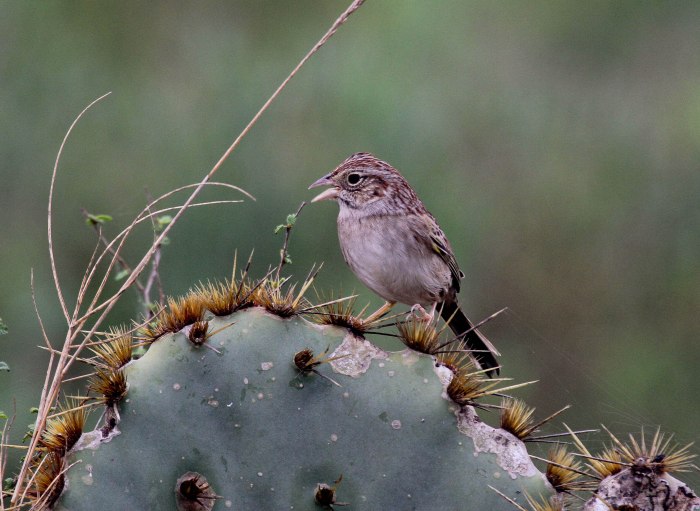 Cassin’s Sparrow
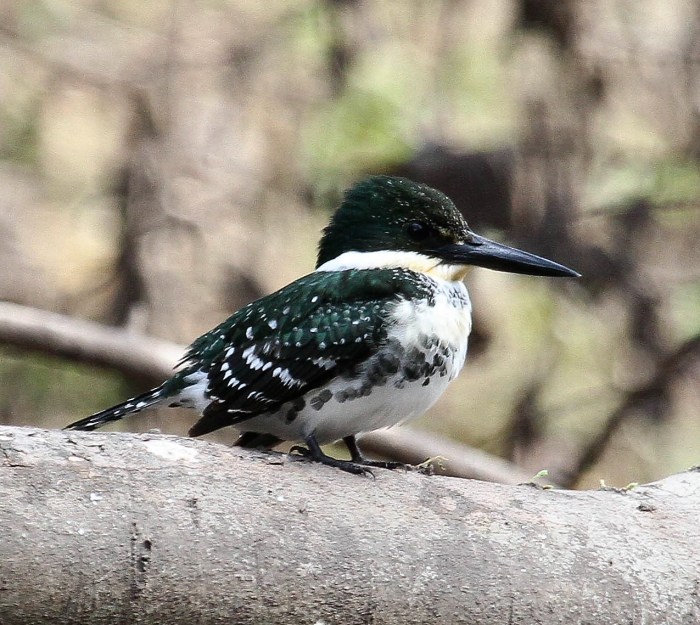 Green Kingfisher
Our next stop was the University of Texas AM’s Brownsville campus to look for a staked-out rarity, a Common Black Hawk. The stakeouts however do not mean guarantee birds, and we did not see the Black Hawk. However we did get looks at our first Ringed and Green Kingfishers along the banks of the campus resaca. Oh well, we would try again later for the hawk. On to Sabal Palms Audubon Sanctuary, home to one of the last remnants of the United State’s native palm tree. This subtropical preserve is one of the southmost points in the US, and we were treated to several new species like Yellow-throated & Black-throated Green Warblers, Gray Hawks, White-tipped Doves and good looks at Olive Sparrow and Green Jays. We took a stroll down to the Rio Grande River itself, with Mexico just a stone’s throw across on the other side.
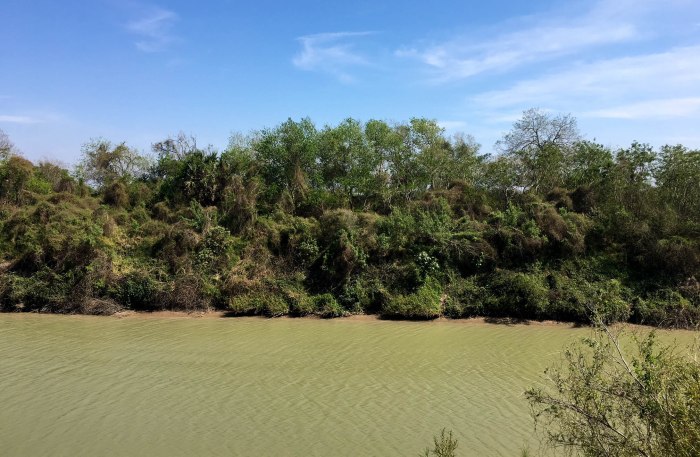 Rio Grande River
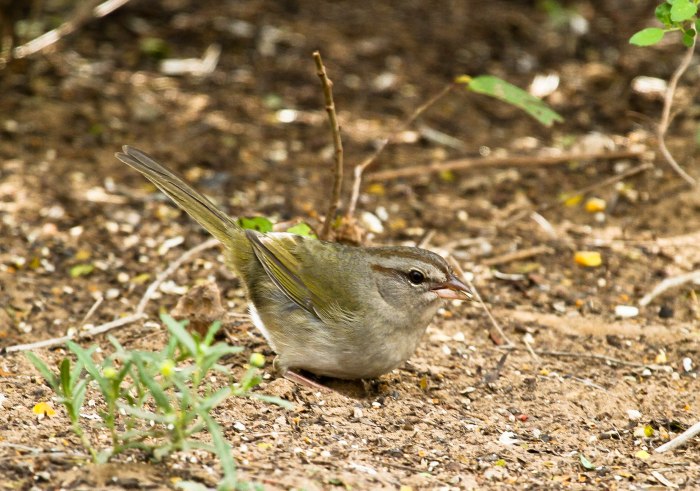 Olive Sparrow
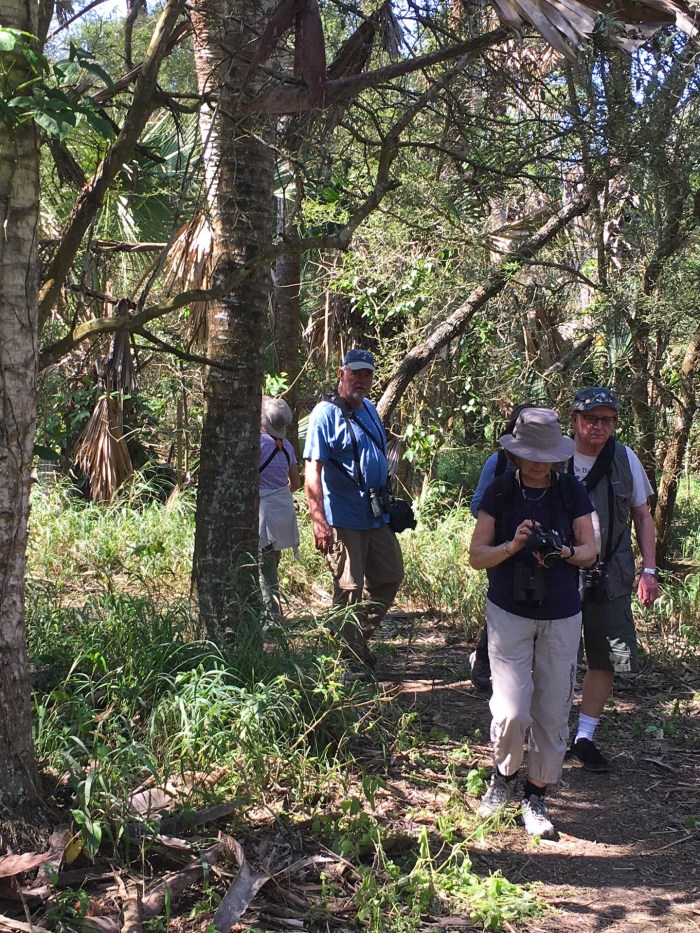 Hiking the trails at Sabal Palms
We made another attempt for the Black Hawk, but after a second no-show, we headed out to take an evening drive to the beautiful and endangered habitat of the coastal prairies along the Boca Chica Road. We had fantastic looks at White-tailed Kite, Harris’s and White-tailed Hawks, dozens and dozens of Caracaras, a Great Horned Owl perched up on a Yucca, and a huge mass of shorebirds feeding on the salt flats. Sadly the flocks were a bit far, but through the scope we could pluck out goodies like Red Knot, Whimbrel and Lesser Black-backed Gulls. Astounding was a huge flock of Reddish Egrets- a 184 to be precise! The expansive waterway in this region is called the Laguna Madre and holds the highest densities of this rare and localized wading bird in the world! Another nice treat here was a coyote that came trotting down the road right passed us.
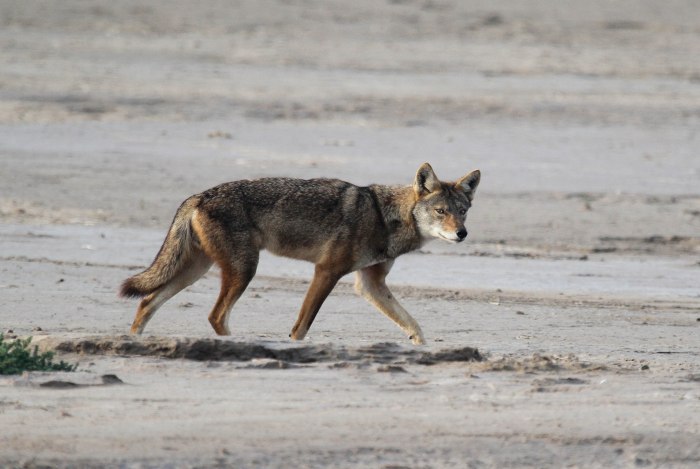 Coyote
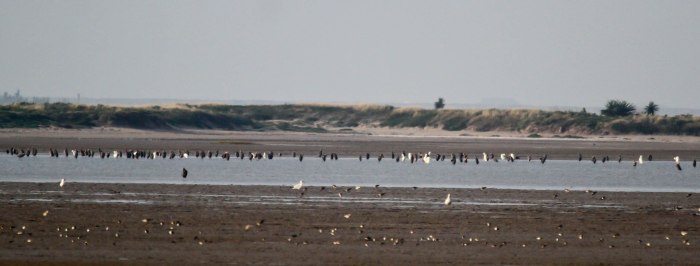 Reddish Egrets. Both white and dark morphs were present, white morphs make up about 10-20% of the population, this was right line with our count of this flock!
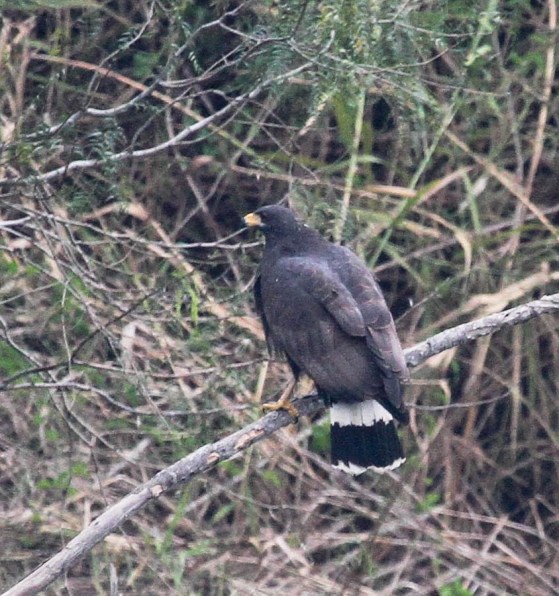
Common Black Hawk
Day 5, February 16: Brownsville to McAllen
Third time is a charm right? We did another attempt before leaving Brownsville for the Common Black Hawk, this time, we walked right up to it perched in a willow! A real treat, it gave quite the performance flying over the resaca to spook a heron off a favored perch. We then started to move into the heart of the Valley, and by 10AM we were pulling up to the lush gardens of the Quinta Mazatlan mansion. Here we had our first Plain Chachalacas, Clay-colored Thrushes (Robins), Buff-bellied Hummingbird, Inca Doves and Common Pauraque. However the main reason we had come to this place was for a known rarity, an immature male Crimson-collared Grosbeak that had been over-wintering here. It took quite a while of us patiently waiting for the bird, complete with a break for sandwiches, but eventually the Grosbeak flew in, giving everyone a good if not ultimately a brief look!
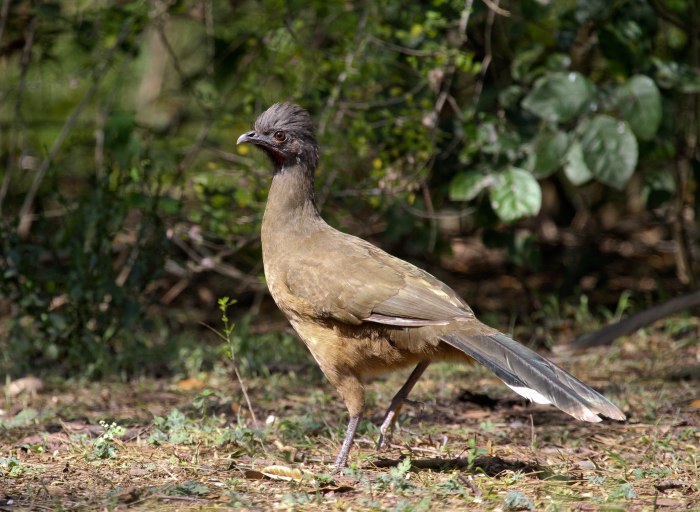 Plain Chachalaca
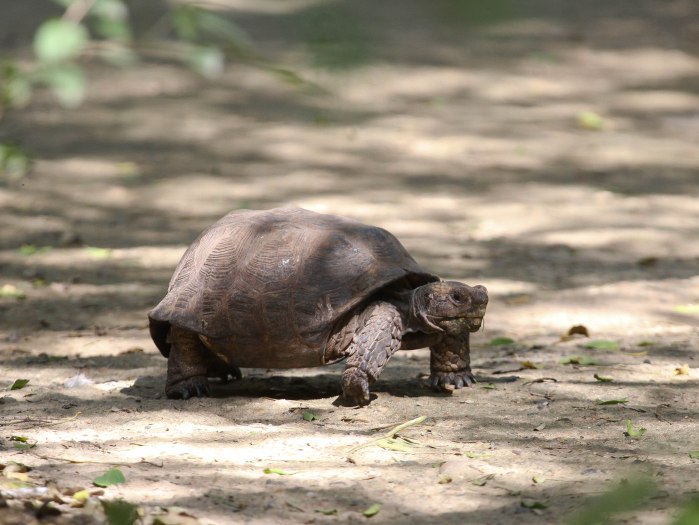 Texas Tortoise
Feeling good about our successes so far, we beelined it over to the Valley Nature Center where another stellar Mexican rarity, a Golden-crowned Warbler was over-wintering. Assisted by the center’s director Matt, along with a couple of friends of mine from Michigan, we circled around the thick woodlot in search of this skulky tropical bird. A Texas Tortoise crossing the trail was a great find, but the bird was proving to be more difficult. Just as we were ready to give up, Matt located the warbler! And boy oh boy did it put on a show for us. Remaining in sight for about 20 minutes (an eternity in warblertime…), the bird preened, foraged and even slayed a large caterpillar in front of us! Certainly my best looks at this species ever!
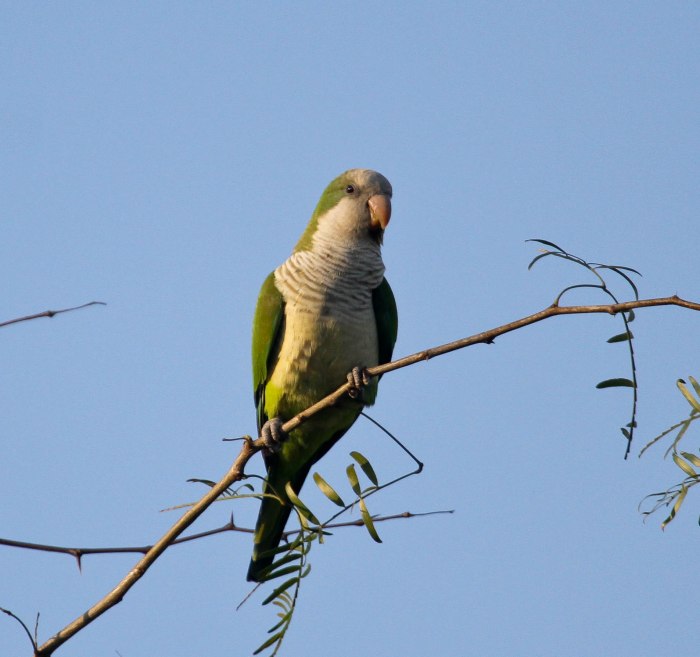 Monk Parakeet
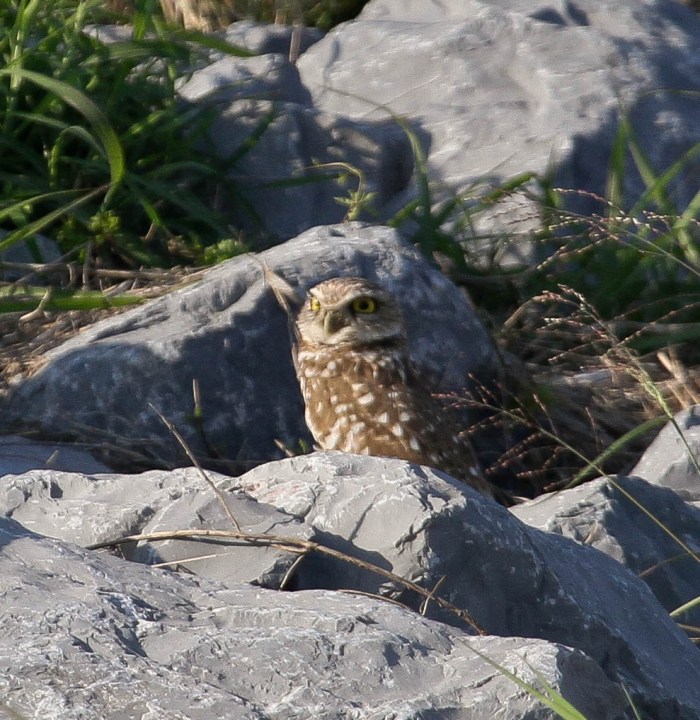 Burrowing Owl
With the afternoon waning, we then headed to the small farming town of Grenjeno. Here we encountered two Burrowing Owls tucked into the rock lined levy. Afterwards we stopped by the nearby town of Hildalgo for a successful look at an established colony of Monk Parakeets. Then on to a fantastic restaurant to celebrate the day’s finds! The warbler was Ron’s 500th ABA bird! Cheers!
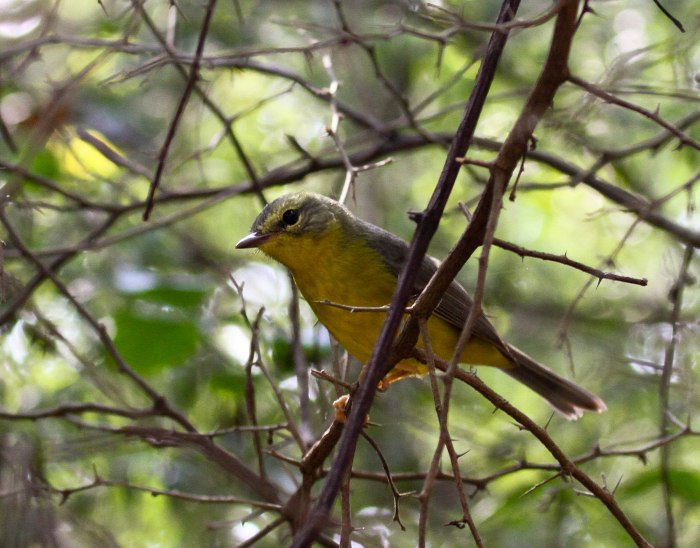 Golden-crowned Warbler
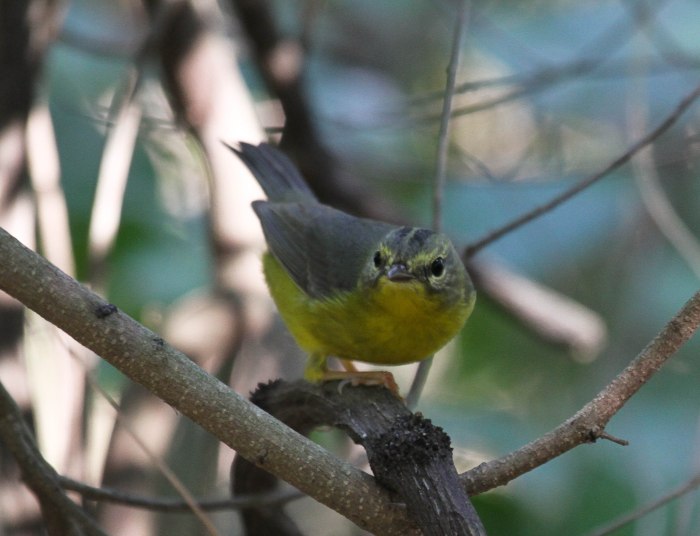
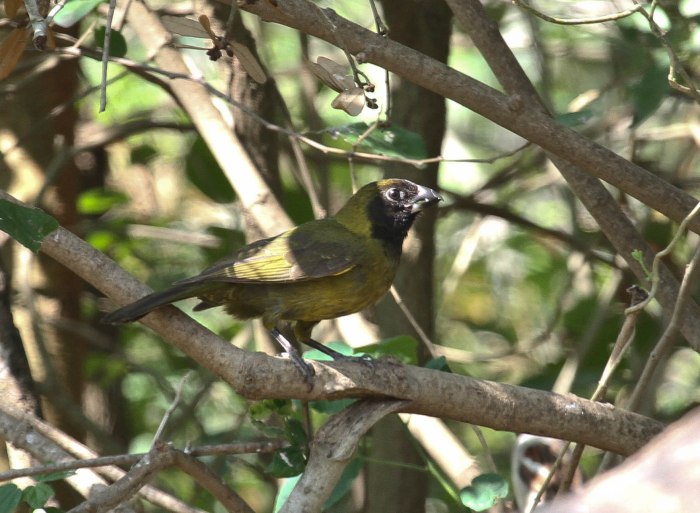 Crimson-collared Grosbeak
Day 6, February 17: McAllen/Weslaco
We started out today with another rarity stakeout- a levy located near Bentsen State Park had been hosting a group of Hook-billed Kites all winter. So off we went to stand on the levy waiting for the kites to lift off out of the mesquite woodlands below. One our way there, we encountered a large flock of Green Parakeets leaving their evening roost. Upon getting to the levy, we waited about 30 minutes before A Hook-billed Kite made a fantastic flyby, with another skimming the treetops further out! Success again! We stopped briefly at the headquarters of Bentsen for a bathroom break where at the feeding station picked up our only Ruby-throated and Black-chinned Hummingbirds for the trip.
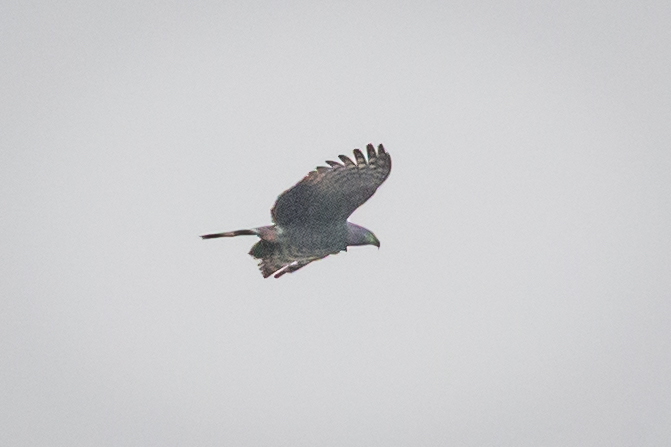 Hook-billed Kite (by Robert Floerke)
We then headed over to one of the best parks in the Valley, Estero Llano State Park. A mix of wetland and forested habitat can help produce a big day total from this site- our total was a robust 80 species! Several new species were observed here including Common Ground-Dove, Sora and Virginia Rails walking around on the mud, Stilt Sandpipers, Yellow-crowned Night-Herons, a McCall’s Eastern Screech-Owl, Blue-headed Vireo and Cave Swallows. Estero has a covered deck that makes an excellent location for picnic lunch, we were treated to flocks of Teal, Dowitchers and Egrets wandering right in front of us as we ate.
We then headed over to the Progresso Sod Farms to try and pluck out a Sprague’s Pipit from the extensive fields and much to my surprise, we had not one, but two Sprague’s give us great looks. We then stopped by a nearby grainery were we encountered our only Bronzed Cowbirds of the tour. And finally in the last light of day we passed back through Granjeno and saw two Short-eared Owls coursing over the fields.
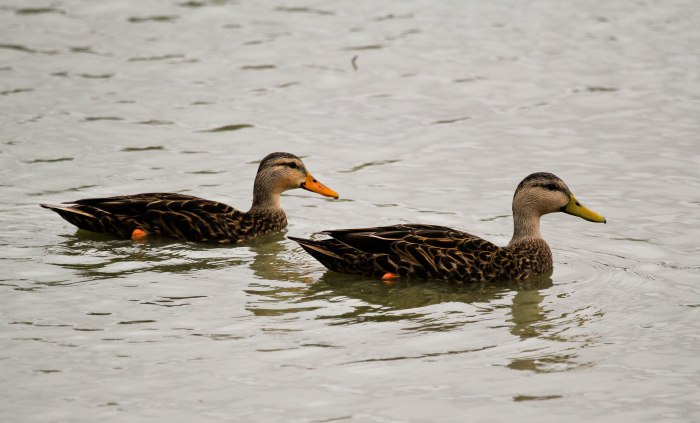 Mottled Ducks
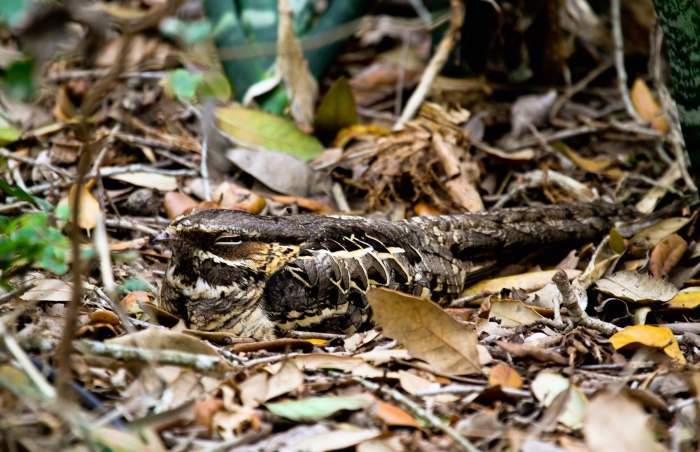 Common Pauraque
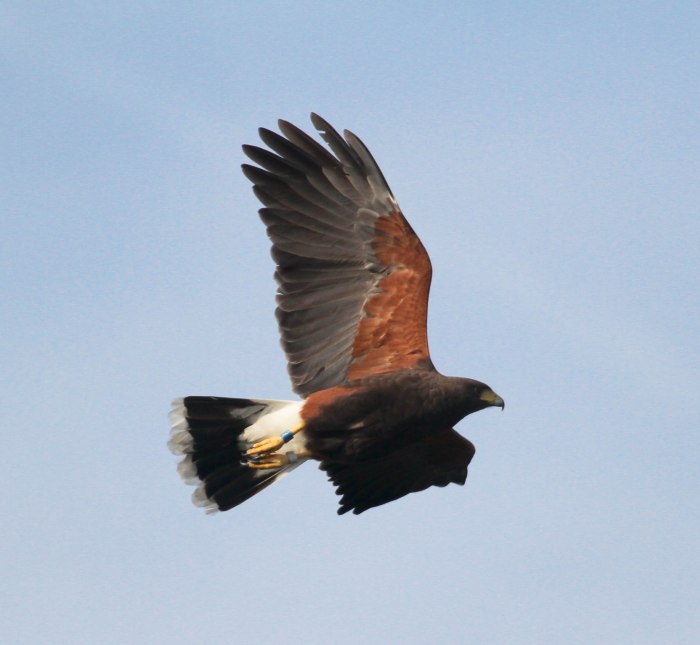 Harris’s Hawk
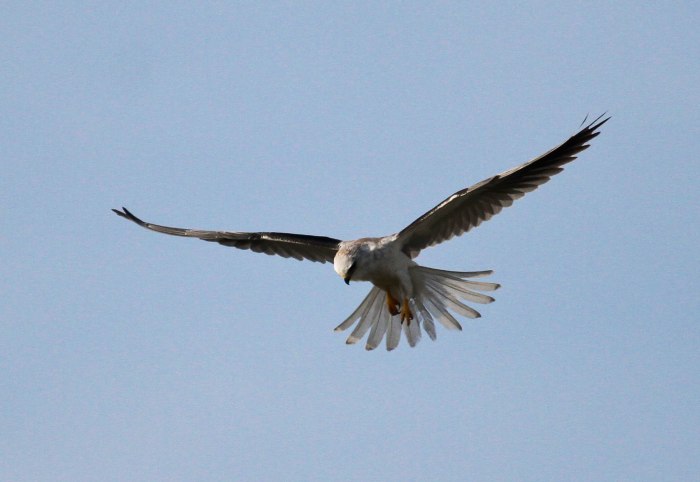 White-tailed Kite
Day 7, February 18: Salineno/Falcon
My other favorite day of the Texas tour is when we head upriver to the Chiuahuan desert scrub of the Falcon area, along with the riparian birding along the Rio in the sleepy little village of Salineno. Every visit to Salineno is a treat and today did not dissapoint! We spent some time along the river, seeing what we could scrouge up. And much to our delight, we scrounged up a really good bird; a pair to be presise, those being Red-billed Pigeons! One even cooperated for us and sat up in a tree singing for a spell. This allowed great scope looks for everyone! Afterwards we then settled in the feeding station at Salineno, where among the Red-winged Blackbird horde, we had several Green Jays, Great Kiskadees, Altamira Oriole and Hooded Orioles and a great look at a Clay-colored Thrush. We had high hopes an Audubon’s Oriole would make an apperance as well, but after waiting for quite some time, too much daylight was burning away so we packed it in and headed out. However, we made only 10 meters before I had a flash of yellow dash over the car and everyone did an amazing job rolling out of the van in record time to enjoy their lifer Audubon’s Orioles teeing up in the mesquite trees along the dirt road.
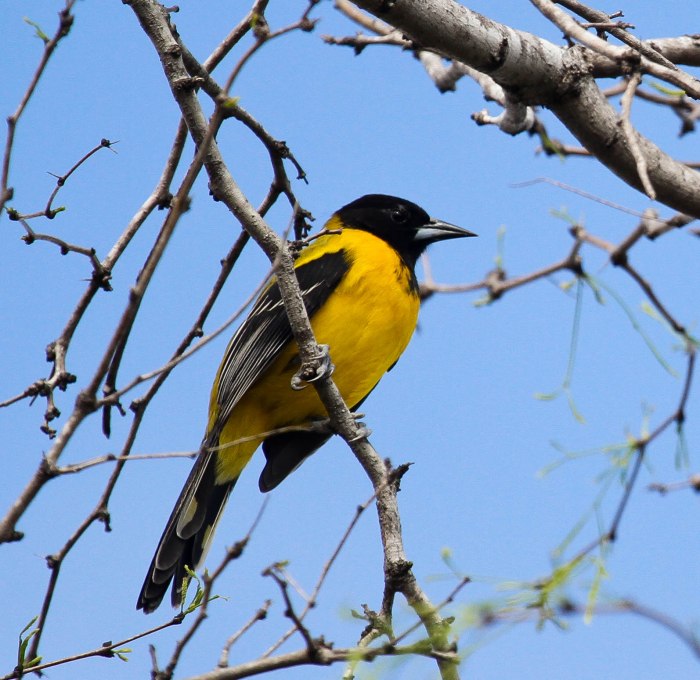 Audubon’s Oriole
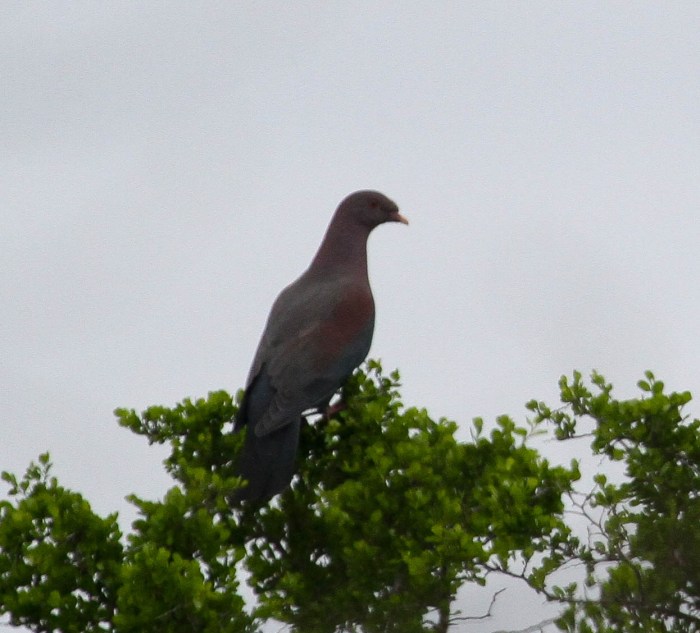 Red-billed Pigeon
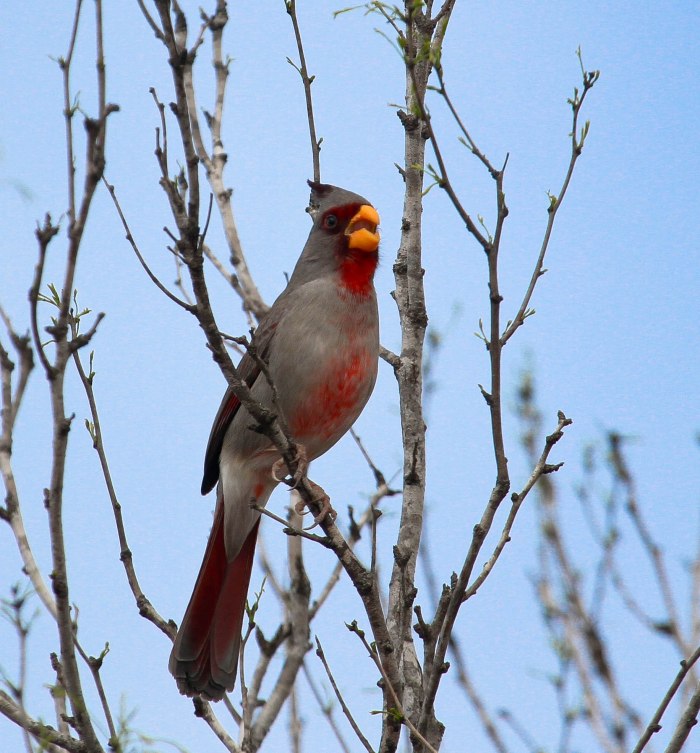 Pyrrhuloxia
After a successful oriole nab, we then wandered the desert scrub for a while picking up a few new species like Pyrrhuloxia, Western Meadowlark, Vesper & Grasshopper Sparrows, Greater Roadrunners and Audubon’s Warbler. A stop for lunch at Falcon State Park yielded more sparrows, Lark, White-throated, White-crowned and Clay-colored as well as our only Black-throated Sparrow of the trip. An unexpected jewel was a fancy Scissor-tailed Flycatcher in the rustic campground! We made a few more attempts for new desert country birds in the late afternoon, but while we were treated to several Vermilion Flycatchers, nothing new popped.
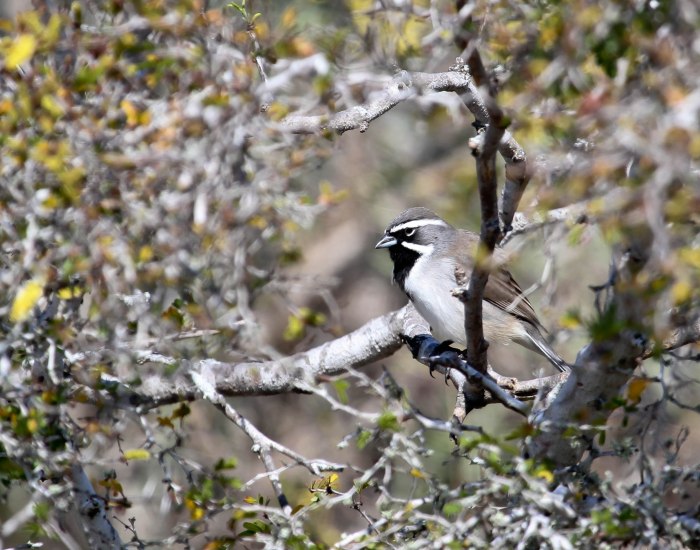 Black-throated Sparrow
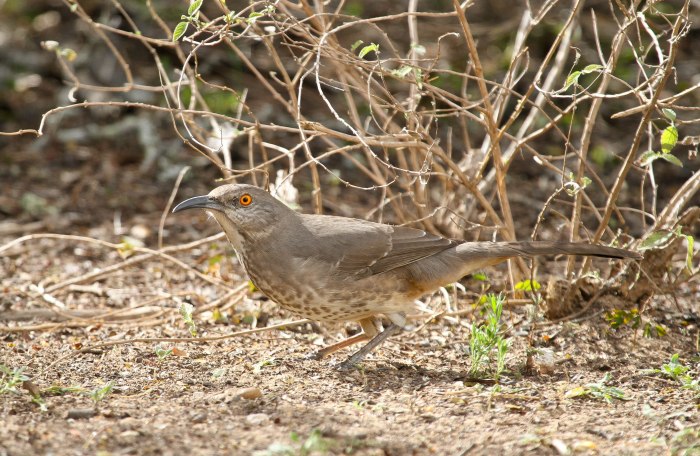 Curve-billed Thrasher
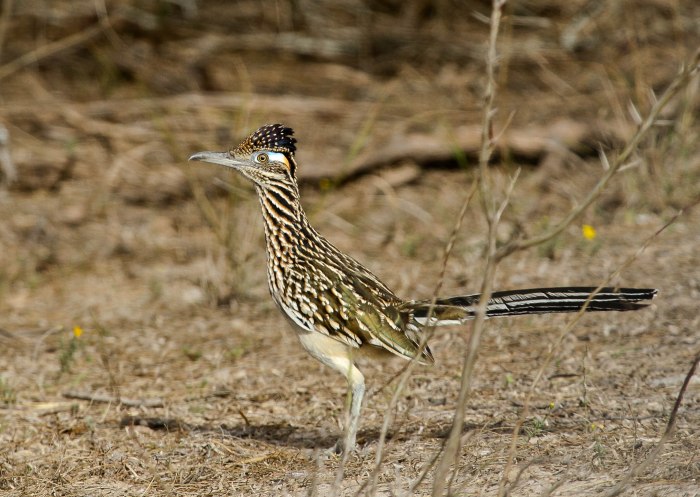 Greater Roadrunner
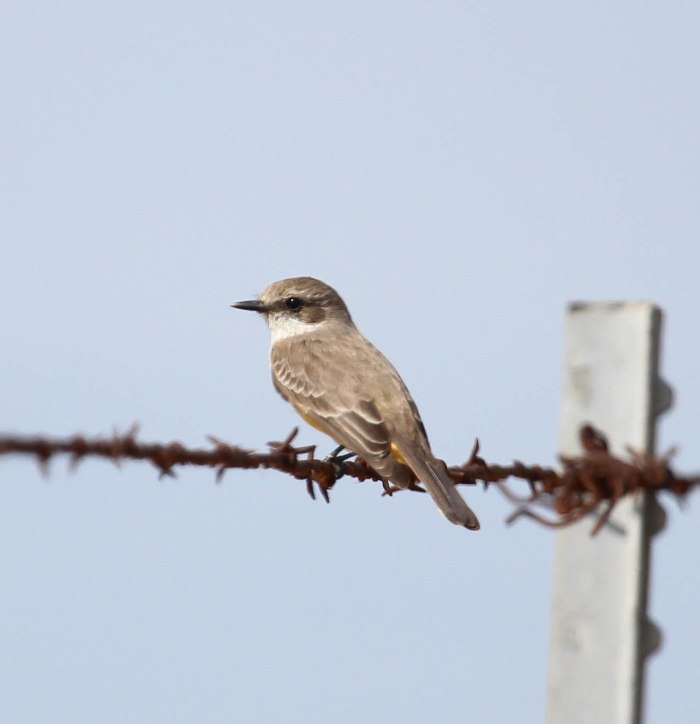 Vermilion Flycatcher
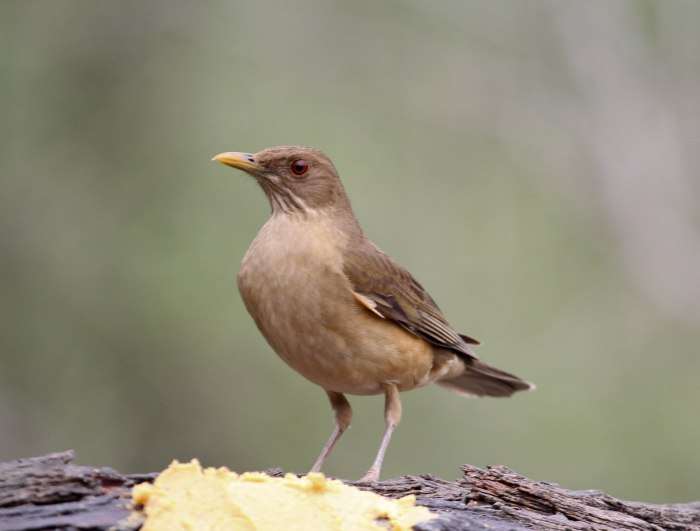 Clay-colored Robin
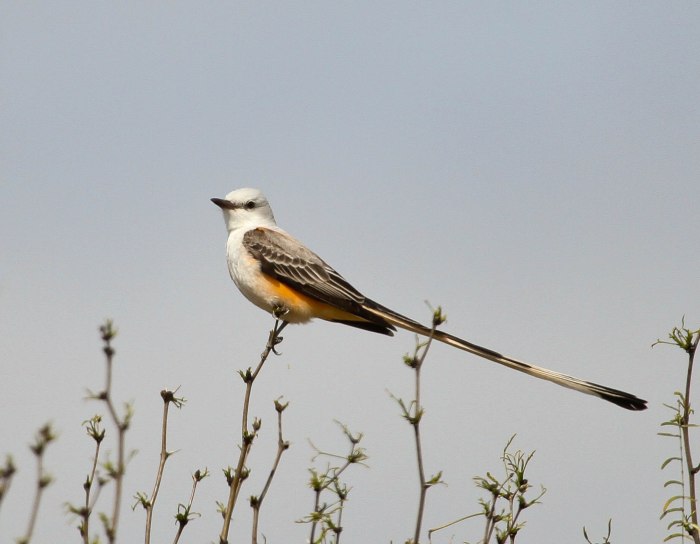 Scissor-tailed Flycatcher
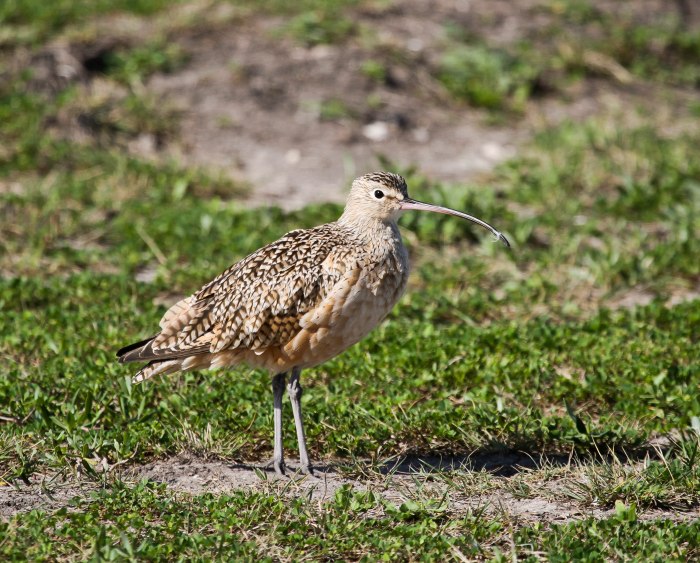 Long-billed Curlew
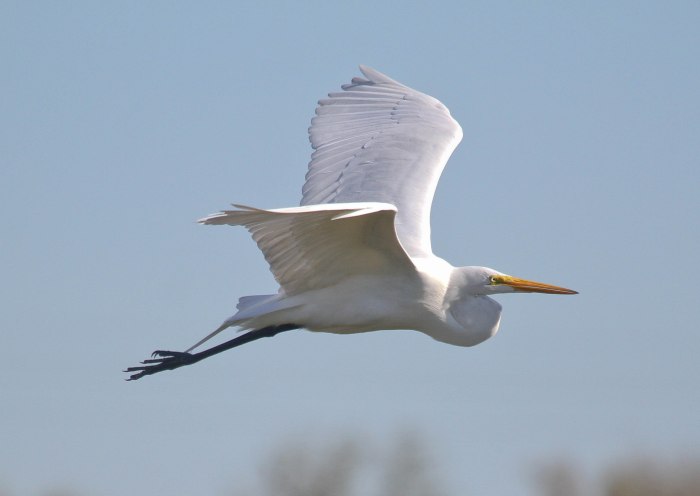 Great Egret
Day 8, February 19: McAllen to Santa Ana NWR
Bittersweet as always, for the last morning of our tour, we headed out to do dawn along a brushy dry-country gravel road hoping for a Say’s Phoebe that had been around. No luck there, but it was a treat to have singing Cassin’s Sparrows and Pyrrhuloxias again. We then headed into town to a cemetery where a rare bird for south Texas; a Plumbeous Vireo had been spending the winter. It took a little while for us to locate it, but picking through flocks of Myrtle, Orange-crowned, Yellow-throated and Black-and-white Warblers is never a chore, and it was a real joy to get everyone on this demure looking vireo!
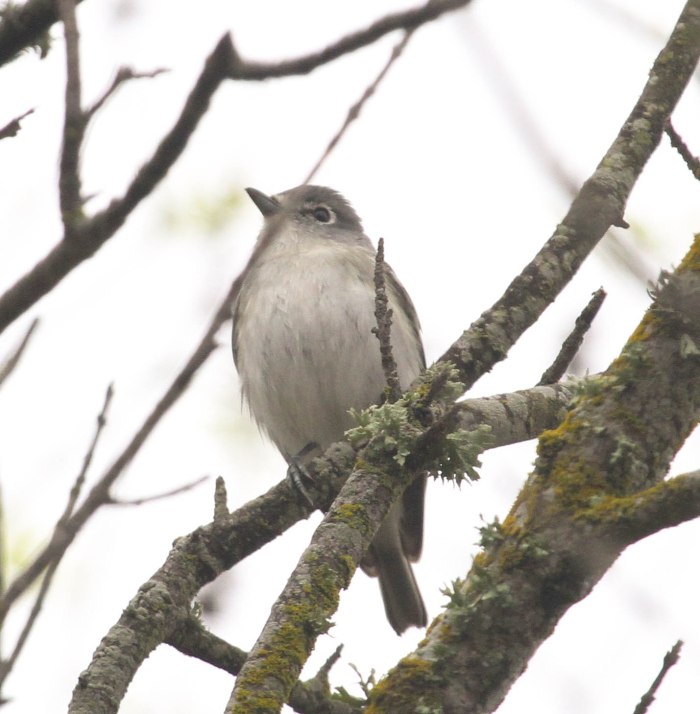 Plumbeous Vireo
We then headed back to the Hook-billed Kite levy, hoping for a second chance for it as well as the Groove-billed Anis that had been reported there. It was raining by the time we got there, and we had no luck with either species. However some of the tour participants had found a perched hawk that warranted a closer look. Upon getting it in the scope, I was blown away to discover that it was a juvenile Roadside Hawk! One had been in this area a few months earlier, could it be the same bird making a reappearance?! Either way, there are only a handful of records for the US and everyone got a good look in the scope at it before it flew down into the forest! WOW! What a great bird to get on our last day! At this point everything else was gravy. We had lunch at the nearby Anzulduas County Park right on the Rio. In the wet cold, not too much was moving but we finally encountered a flock of Cattle Egrets as well as a few new species of swallow. To wrap things up, we finished out taking a walk at Santa Ana Nat. Wildlife Refuge with my friends from Michigan who put us on some Cinnamon Teal and our last new bird of the trip, a Least Flycatcher.
We concluded out tour with a final meal at a great restaurant. It was a mirthful affair and everyone was overjoyed with the sights they had seen. The final tally for the tour came to 217 birds; a record for this tour I think may stand for a long time!
I want to acknowledge the Eagle-Eye office staff for their excellent work with the tour logistics; to my friends Mark & Joanie Hubinger and Tracy & Jim Zervos for their assistance and good company with the tour; to Mary Gustafson for all the hard work she does compiling and moderating the rare bird alerts and ebird database; and to all my participants of this tour- you all were a delightful group and your cheery personas and go-get’um birder attitudes made for a wonderful week! Thank you!
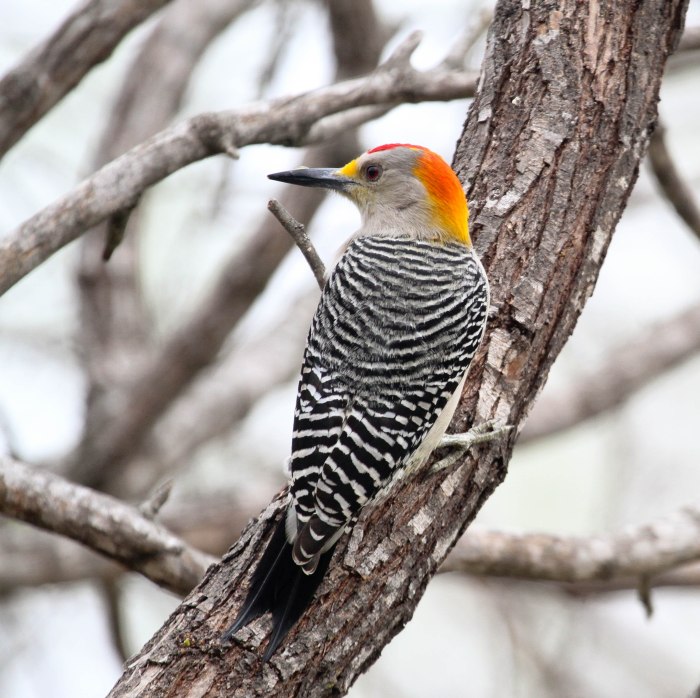 Golden–fronted Woodpecker
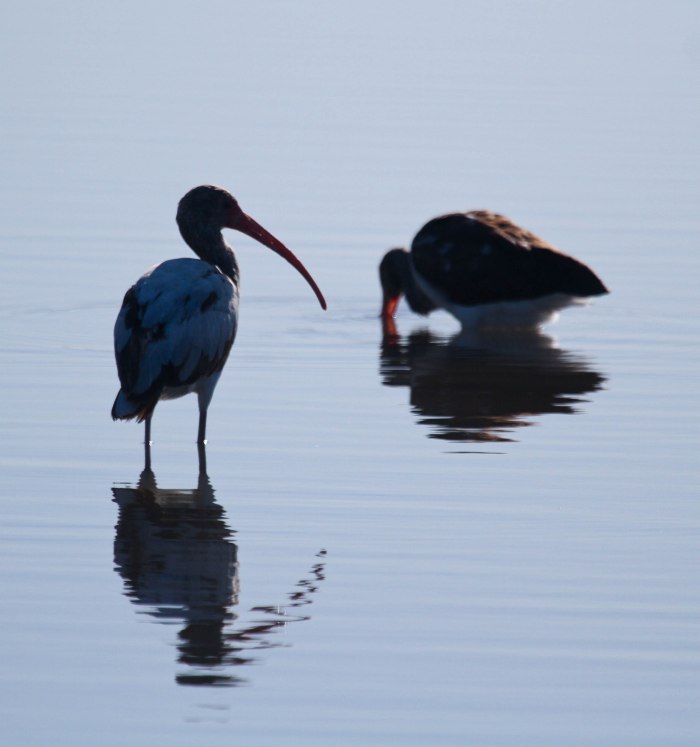 White Ibis
| Black-bellied Whistling-Duck | Little Blue Heron | American Oystercatcher |
| Greater White-fronted Goose | Tricolored Heron | Black-bellied Plover |
| Ross’s Goose | Reddish Egret | Wilson’s Plover |
| Gadwall | Cattle Egret | Semipalmated Plover |
| American Wigeon | Green Heron | Killdeer |
| Mexican Duck (Mallard) | Black-crowned Night-Heron | Spotted Sandpiper |
| Mallard | Yellow-crowned Night-Heron | Solitary Sandpiper |
| Mottled Duck | White Ibis | Greater Yellowlegs |
| Blue-winged Teal | Glossy Ibis | Willet (Western) |
| Cinnamon Teal | White-faced Ibis | Lesser Yellowlegs |
| Northern Shoveler | Roseate Spoonbill | Whimbrel |
| Northern Pintail | Black Vulture | Long-billed Curlew |
| Green-winged Teal | Turkey Vulture | Marbled Godwit |
| Redhead | Osprey | Ruddy Turnstone |
| Ring-necked Duck | White-tailed Kite | Red Knot |
| Lesser Scaup | Hook-billed Kite | Stilt Sandpiper |
| Bufflehead | Northern Harrier | Sanderling |
| Common Goldeneye | Sharp-shinned Hawk | Dunlin |
| Hooded Merganser | Cooper’s Hawk | Least Sandpiper |
| Red-breasted Merganser | Common Black Hawk | Western Sandpiper |
| Ruddy Duck | Harris’s Hawk | Short-billed Dowitcher |
| Plain Chachalaca | White-tailed Hawk | Long-billed Dowitcher |
| Northern Bobwhite | Roadside Hawk | Wilson’s Snipe |
| Common Loon | Gray Hawk | Laughing Gull |
| Least Grebe | Red-shouldered Hawk | Ring-billed Gull |
| Pied-billed Grebe | Red-tailed Hawk | Herring Gull |
| Horned Grebe | King Rail | Lesser Black-backed Gull |
| Eared Grebe | Clapper Rail | Caspian Tern |
| Neotropic Cormorant | Virginia Rail | Forster’s Tern |
| Double-crested Cormorant | Sora | Royal Tern |
| Anhinga | Common Gallinule | Black Skimmer |
| American White Pelican | American Coot | Rock Pigeon |
| Brown Pelican | Sandhill Crane | Red-billed Pigeon |
| Great Blue Heron | Whooping Crane | Eurasian Collared-Dove |
| Great Egret | Black-necked Stilt | Inca Dove |
| Snowy Egret | American Avocet | Common Ground-Dove |
| White-tipped Dove | Scissor-tailed Flycatcher | Nashville Warbler |
| White-winged Dove | Loggerhead Shrike | Common Yellowthroat |
| Mourning Dove | White-eyed Vireo | Myrtle Warbler |
| Greater Roadrunner | Blue-headed Vireo | Audubon’s Warbler |
| Eastern Screech-Owl | Plumbeous Vireo | Black-and-white Warbler |
| Great Horned Owl | Green Jay | Yellow-throated Warbler |
| Short-eared Owl | American Crow | Black-throated Green Warbler |
| Burrowing Owl | Horned Lark | Wilson’s Warbler |
| Common Pauraque | Purple Martin | Golden-crowned Warbler |
| Ruby-throated Hummingbird | Northern Rough-winged Swallow | Olive Sparrow |
| Black-chinned Hummingbird | Tree Swallow | Cassin’s Sparrow |
| Buff-bellied Hummingbird | Cave Swallow | Chipping Sparrow |
| Ringed Kingfisher | Barn Swallow | Clay-colored Sparrow |
| Belted Kingfisher | Bank Swallow | Field Sparrow |
| Green Kingfisher | Black-crested Titmouse | Vesper Sparrow |
| Golden-fronted Woodpecker | Black-crested X Tufted Titmouse hybrid | Lark Sparrow |
| Ladder-backed Woodpecker | Verdin | Black-throated Sparrow |
| Crested Caracara | House Wren | Savannah Sparrow |
| American Kestrel | Sedge Wren | Grasshopper Sparrow |
| Merlin | Carolina Wren | Lincoln’s Sparrow |
| Aplomado Falcon | Bewick’s Wren | Swamp Sparrow |
| Peregrine Falcon | Cactus Wren | White-throated Sparrow |
| Red-crowned Parrot | Blue-gray Gnatcatcher | White-crowned Sparrow |
| Red-lored Parrot | Ruby-crowned Kinglet | Crimson-collared Grosbeak |
| Lilac-crowned Parrot | Clay-colored Thrush | Northern Cardinal |
| White-fronted Parrot | American Robin | Pyrrhuloxia |
| Monk Parakeet | Gray Catbird | Indigo Bunting |
| Green Parakeet | Curve-billed Thrasher | Red-winged Blackbird |
| Black Phoebe | Long-billed Thrasher | Western Meadowlark |
| Eastern Phoebe | European Starling | Eastern Meadowlark |
| Vermilion Flycatcher | American Pipit | Brewer’s Blackbird |
| Great Kiskadee | Sprague’s Pipit | Great-tailed Grackle |
| Tropical Kingbird | Cedar Waxwing | Bronzed Cowbird |
| Couch’s Kingbird | Orange-crowned Warbler | Brown-headed Cowbird |
| Altamira Oriole | ||
| Audubon’s Oriole | ||
| Hooded Oriole | ||
| House Finch | ||
| American Goldfinch | ||
| House Sparrow | ||
| MAMMALS | ||
| Atlantic Bottlenose Dolphin | ||
| Raccoon | ||
| Hispid Cotton Rat | ||
| Gray Squirrel | ||
| Fox Squirrel | ||
| Nutria | ||
| Coyote | ||
| Desert Cottontail | ||
| Javalina (Collared Peccary) | ||
| White-tailed Deer | ||
| Blackbuck | ||
| Impala | ||
| Oryx | ||
| Axis Deer | ||
| HERPTOFAUNA | ||
| Texas Tortoise | ||
| Red-eared Slider | ||
| Alligator | ||
| BUTTERFLIES | ||
| Red Admiral | ||
| Giant Swallowtail | ||
| Black Swallowtail | ||
| White Peacock | ||
| Checkered White | ||
| Checkered Skipper | ||
 Borealis Birding