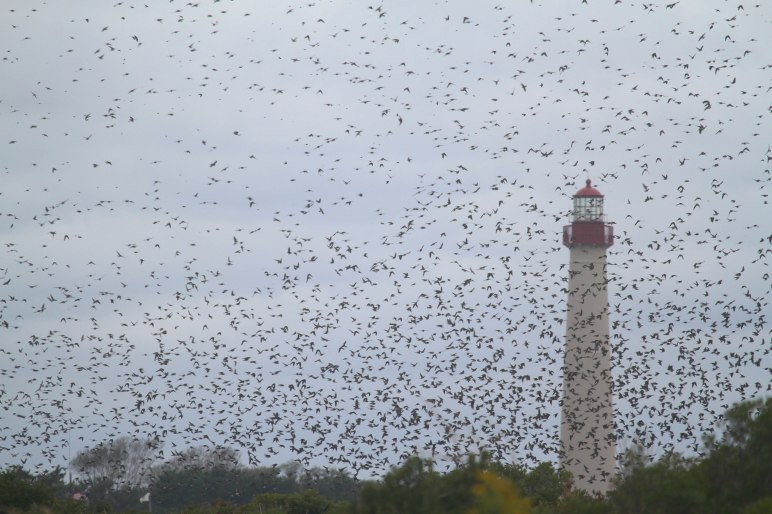
So. Many. Birds! That’s been Cape May Bird Observatory’s catchphrase for the last several years, and as we experienced in our fall migration Eagle-Eye tour, it’s quite the well-earned moniker. Our visit to the capitol city of American birding was outstanding this year and we had several days full of amazing totals of birds! As with so many other great migration hotpots Cape May is a peninsula, set at the confluence of the Delaware Bay and the Atlantic Ocean at the south end of New Jersey. Every spring and fall, hundreds of thousands of migrating birds pass through this geographic funnel comprised of juniper thickets, sandy beaches and extensive salt marshes. I formerly had worked as a migration counter for the Cape May Bird Observatory, and as always it was great to visit my old stomping grounds!
We first gathered in our hotel in Philadelphia for an evening dinner meet and greet. A nice meal and a chance for everyone to get to know each other was appreciated and then it was off to bed so we could drive into Jersey in the morning.
DAY ONE
After our breakfast at the hotel, we loaded up our van and had a pleasant morning drive through the Jersey Pine Barrens. Our first birding stop was the legendary Avalon Seawatch. I often affectionately call it my grad program as I spend two years counting migrating seabirds here. It was great to be back and we immediately had strings of dozens and dozens of Double-crested Cormorants migrating by. A couple of Common Loons also were seen and making for a striking view were a couple of flocks of American Oystercatchers winging by. We enjoyed working a flock of shorebirds on the jetty getting a close-up look at Semipalmated and Black-bellied Plovers, Sanderlings and Dowitchers before a Peregrine Falcon spooked them up. Afterwards we headed to a nearby heron rookery where we had a few handsome Yellow-crowned Night-Herons perched up in the junipers.
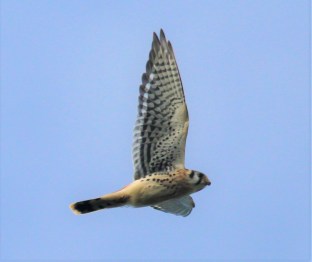
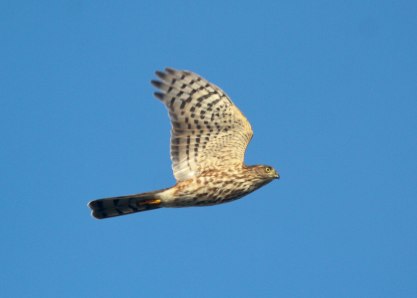
We then headed down to Cape May proper to check in to our beachside motel where we would spend the rest of the tour at. Afterwards we headed over to the Cape May State Park where we checked out the deck where Cape May Bird Observatory (CMBO) runs their raptor count program. Within moments of stepping out of the van, we had multiple raptors cutting right over the Cape May lighthouse. Clearly we had hit a good afternoon for hawk migration, as they were over the skies! In particular American Kestrels were having a massive movement that day and we were awed at the steady stream of these beautiful and declining little falcons. We stood on the deck for hours watching the show that was augmented by lots of Merlins, Sharp-shinned and Cooper’s Hawks plus vultures, Bald Eagles and harriers. Even the local veterans were amazed to see so many Kestrels; apparently it had been many years since anyone had seen such a big flight of this species! It also was according to the counter, the first day that there had been any kind of hawk movement, and had arrived on what many were calling the first real day of the season!
And raptors weren’t the only birds around either- the pond in front of us was full of various duck species an excellent look at an a classic Cape May rarity a handsome drake Eurasian Wigeon, a life bird for a few on the tour! Even more of a notable rarity and certainly a first for me in New Jersey were a flock of five juvenile White Ibis that bombed right over the deck and passed the lighthouse towards Delaware.
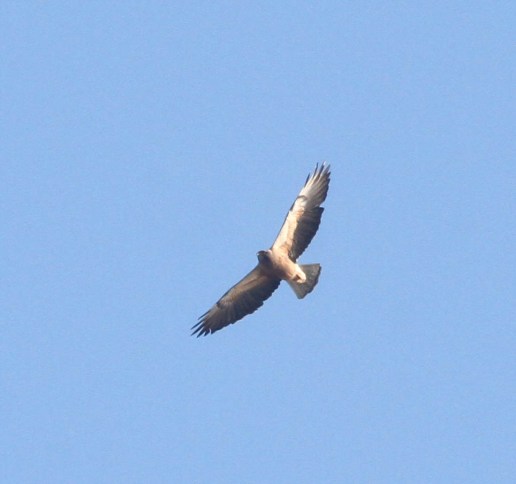
We finally tore ourselves away from the deck and started to work our way around the rest of the lower Cape, everywhere we went, volleys of Kestrels bounced along overhead. The beaches had large flocks of Forster’s Terns and Laughing Gulls and just a few blocks inland we stopped at the CMBO nature center sorting through little flocks of migrant warblers like Blackpolls, Palm, Parulas, Cape Mays, Redstarts and more. Adding to the southern feel of being just over to the Mason-Dixon Line were the many Carolina Chickadees and Carolina Wrens. We took a quick late afternoon breather to check in to our conveniently close-by beachside motel, but all wanted to squeeze every last moment of this fantastic day and we headed back to the state park to roam around. And what a great decision it was too as about ten minutes down the trail we had the incredible good fortune of having a young Swainson’s Hawk circle right overhead. This western prairie bird is only rarely seen in the East and it was a great bird to finish the best raptor flight I had ever had here! Finally dark started to fall and we set our binoculars down and headed off for an amazing Italian meal at one of the many delectable restaurants that are riddled throughout Cape May.
DAY TWO
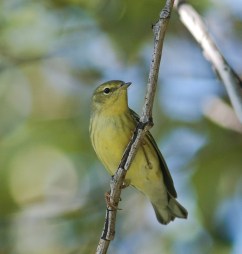
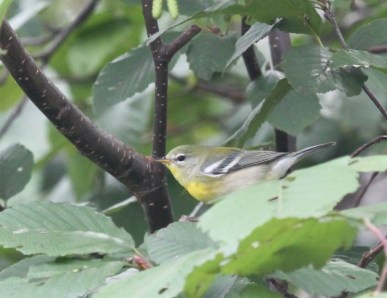
We started out today by checking out the last of CMBO’s three migrate on count programs, the Morning Songbird Flight at Higbee Dike. Here talented counters do the amazing job of spotting and identifying migrating warblers and other songbirds as they zip past overhead, often just using partial clues of tail patterns or the high-pitched flight call notes birds make when migrating. We unfortunately didn’t hit it on one of the big days when thousands of warblers are streaming by, but that was ok as it gave us the chance to actually observe the ones that were moving as opposed to the river of birds that one can drown their binoculars in! Afterwards we then walked around the Higbee Meadow looking for songbirds that had settled down to forage after a long night of migration. Like the flight, the meadow was a little slow today, but still Tufted Titmice, Brown Thrashers and a few warbler species as well as a nice look at a pair of Red-eyed Vireos foraging at eye level.
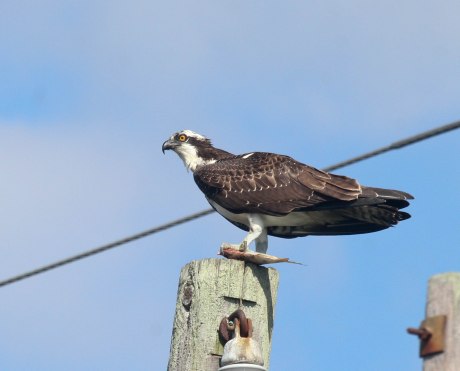
After lunch, we headed out into the saltmarshes to search for shorebirds and sparrows. These extensive barrier island wetlands were full of elegant waders; Great Blues, Great Egrets and Snowy Egrets were plentiful, and we had some great looks at several Tricolored Herons. I slipped on my tall boots and did my best to herd the secretive Saltmarsh Sparrows out the damp long spartina grass and up to the dryer feet of the group where all got fantastic looks at these sublime specialties of the coast. At the nearby Wetlands Research Institute we had a large flock of Western Willets and our only Little Blue Heron of the tour. The entire time one could spot an Osprey winging by or feasting on a recent catch from top a post.
DAY THREE
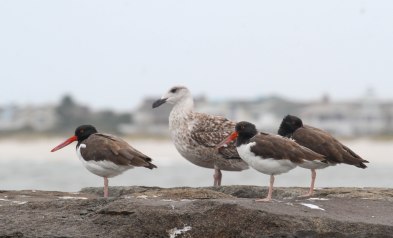
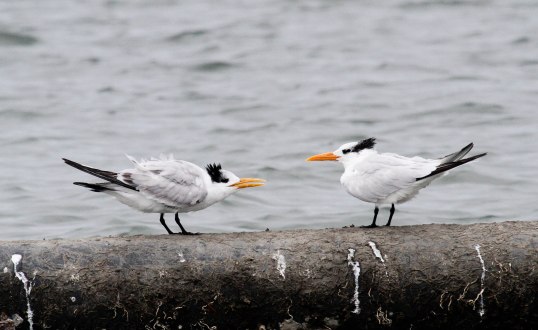
We started our day getting our early morning pancakes, and picked up a new trip bird in the form of Black Skimmers just across the street on the beach! We then headed to the tip of the Cape and did our best to pluck out Parasitic Jaegers offshore harassing the large tern/gull flock feeding in the waves as well as having a flyby White-winged Scoter- our only one of the trip. Everywhere we went we were astounded by the huge flocks of Tree Swallows that were congealing along the shore. But we didn’t have too long to tarry today as we were booked to take a boat cruise into the back saltmarshes for a few hours. On the boat we had several flocks of shorebirds, including many pairs of American Oystercatchers. Laughing Gulls and
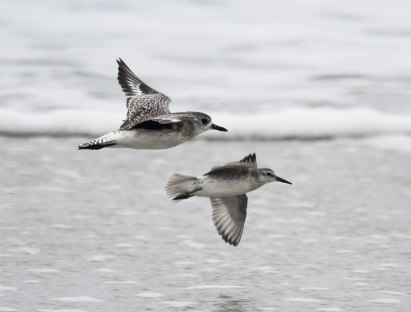
Forster’s Terns were ubiquitous and we saw many several Royal Terns, typically a young of the year still begging for food from an attending parent. After the cruise, we slide back up to the Avalon Seawatch were we finally had some Black and Surf Scoters migrating by. Due to the mild fall, most of the waterbirds really hadn’t started to move by in big numbers but this was a taste of the thousands of ducks that would fly by this spot in just a few weeks. We finished up walking along the beach combing flocks of shorebirds, seeing big numbers of Sanderlings, Black-bellied Plovers and our evening target, another Cape May classic- Red Knots.
DAY FOUR
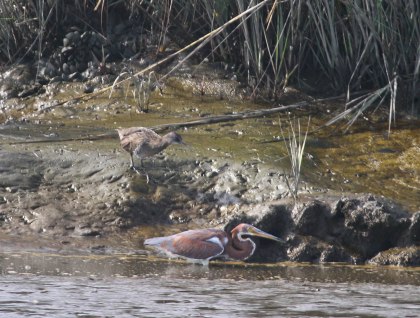
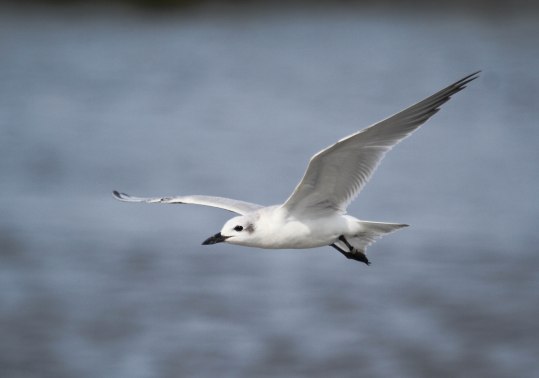
Today we headed up to Forsythe National Wildlife Refuge; with an extensive wildlife drive that goes through several habitat types, we ended up having a great day of birding! Right off the bat we had fantastic looks at a couple of Clapper Rails foraging out on the open mudflats of low tide. There weren’t the huge number of waterfowl, but diversity was good and we picked up a few new species, including Wood and Ruddy Ducks. Shorebirds were great and we finally picked up Western Sandpipers. A seasonal rarity was a Gull-billed Tern that performed for us! In the woodlands we encountered flocks of Chipping Sparrows and a Yellow-billed Cuckoo.
DAY FIVE
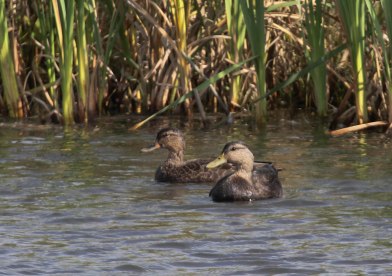
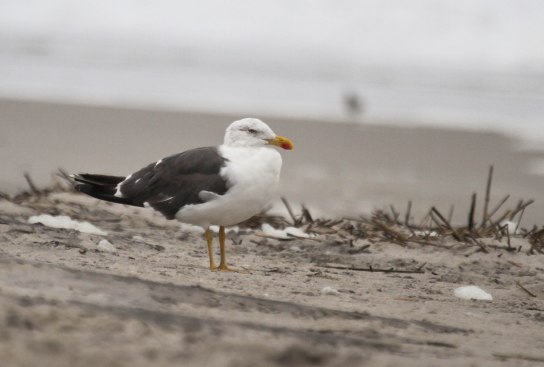
For our final day of the tour we started out at the Cape May Meadows, a fantastic wetland preserve owned by the Nature Conservancy. Here we got to look at several of the marshy-loving shorebirds like Yellowlegs, Snipe, Least, Pectoral and White-rumped Sandpipers. Out on the beach, a handful of Lesser Black-backed Gulls were present, but we were just stopped in our tracks at the mega-sized Tree Swallow flock foraging on the wax myrtle bushes- this is the featured photograph at the beginning of this report! We then did a big loop around the State Park, but at this point it had been a few days since a north wind had happened and the Cape was in need of a new input of migrants. Still it was nice to see for one last day Kestrels and Sharp-shins drifting by, Black Ducks and Gadwall dabbling in the ponds, Parasitic Jaegers coursing over the surf and a few Myrtle Warblers dashing in the bushes. It was a great way to wrap up a successful tour with 124 birds species comprised of thousands of individuals seen! Cape May proved itself to be the migration capitol of the East Coast yet again!
| Canada Goose |
| Mute Swan |
| Wood Duck |
| Blue-winged Teal |
| Northern Shoveler |
| Gadwall |
| EURASIAN WIGEON |
| American Wigeon |
| American Black Duck |
| Mallard |
| Northern Pintail |
| White-winged Scoter |
| Surf Scoter |
| Black Scoter |
| Ruddy Duck |
| Common Loon |
| Pied-billed Grebe |
| Northern Gannet |
| Double-crested Cormorant |
| BROWN PELICAN |
| AMERICAN BITTERN |
| Great Blue Heron |
| Great Egret |
| Snowy Egret |
| Little Blue Heron |
| TRICOLORED HERON |
| Black-crowned Night-Heron |
| Yellow-crowned Night-Heron |
| WHITE IBIS |
| Black Vulture |
| Turkey Vulture |
| Osprey |
| Northern Harrier |
| Sharp-shinned Hawk |
| Cooper’s Hawk |
| Bald Eagle |
| Broad-winged Hawk |
| SWAINSON’S HAWK |
| Red-tailed Hawk |
| Clapper Rail |
| Virginia Rail |
| American Oystercatcher |
| Black-bellied Plover |
| Semipalmated Plover |
| Killdeer |
| Ruddy Turnstone |
| Red Knot |
| Sanderling |
| Dunlin |
| Least Sandpiper |
| Pectoral Sandpiper |
| Semipalmated Sandpiper |
| Western Sandpiper |
| White-rumped Sandpiper |
| Short-billed Dowitcher |
| Wilson’s Snipe |
| Western Willet |
| Lesser Yellowlegs |
| Greater Yellowlegs |
| PARASITIC JAEGER |
| Laughing Gull |
| Ring-billed Gull |
| Herring Gull |
| Lesser Black-backed Gull |
| Great Black-backed Gull |
| GULL-BILLED TERN |
| Caspian Tern |
| Common Tern |
| Forster’s Tern |
| Royal Tern |
| Black Skimmer |
| Rock Pigeon |
| Mourning Dove |
| Ruby-throated Hummingbird |
| Belted Kingfisher |
| Red-belllied Woodpecker |
| Yellow-bellied Sapsucker |
| Hairy Woodpecker |
| Northern Flicker |
| American Kestrel |
| Merlin |
| Peregrine Falcon |
| Red-eyed Vireo |
| Blue Jay |
| American Crow |
| Fish Crow |
| COMMON RAVEN |
| Tree Swallow |
| Barn Swallow |
| Carolina Chickadee |
| Tufted Titmouse |
| Red-breasted Nuthatch |
| House Wren |
| Marsh Wren |
| Carolina Wren |
| American Robin |
| Gray Catbird |
| Brown Thrasher |
| Northern Mockingbird |
| European Starling |
| Cedar Waxwing |
| Black-and-white-Warbler |
| Nashville Warbler |
| Common Yellowthroat |
| American Redstart |
| Cape May Warbler |
| Northern Parula |
| Blackpoll Warbler |
| Palm Warbler |
| Pine Warbler |
| Yellow-rumped Warbler |
| Black-throated Green Warbler |
| Saltmarsh Sparrow |
| Savannah Sparrow |
| Song Sparrow |
| Swamp Sparrow |
| Northern Cardinal |
| Indigo Bunting |
| Red-winged Blackbird |
| Brown-headed Cowbird |
| Common Grackle |
| Boat-tailed Grackle |
| Bobolink |
| House Finch |
| American Goldfinch |
| House Sparrow |
| Mammals |
| Muskrat |
| Gray Squirrel |
| White-tailed Deer |
| Eastern Cottontail |
| Bottlenose Dolphin |
| Herps |
| Painted Turtle |
| Red-bellied Turtle |
| Diamondback Terrapin |
| Butterflies |
| Monarch |
| Buckeye |
| Cloudless Sulfur |
| Painted Lady |
| Orange Sulfur |
| Red Admiral |
 Borealis Birding