A brand new adventure for Eagle-Eye Tours, this merry caper found us roaming through the wind and waves in search of ocean wanderers like Shearwaters and Storm-Petrels. We also traversed the beaches of the outer banks enjoying a diverse assemblage of shorebirds, terns, egrets and rails. And for a final act, we headed inland to the pine savannahs where we tracked down one of the rarest breeding birds of the southeastern U.S., the Red-cockaded Woodpecker, all the while enjoying the various species of warblers, sparrows and flycatchers as well as numerous species of mammals, snakes, turtles and butterflies of coastal North Carolina! Our final avian species total was a rousing 131 species. See the taxa list at the end of the report for a complete accounting of all species observed.
Day 1, June 6: Norfolk, Virginia
Our tour began with an evening meet and greet over a delicious meal at a local restaurant that was dedicated to suitable farm to table ingredients and set what was the first of many great meals we had to end each day with. We spent the night here in Norfolk and in the morning would start the drive to the Outer Banks of North Carolina.
Day 2, June 7: Norfolk, Virginia to Hatteras, North Carolina
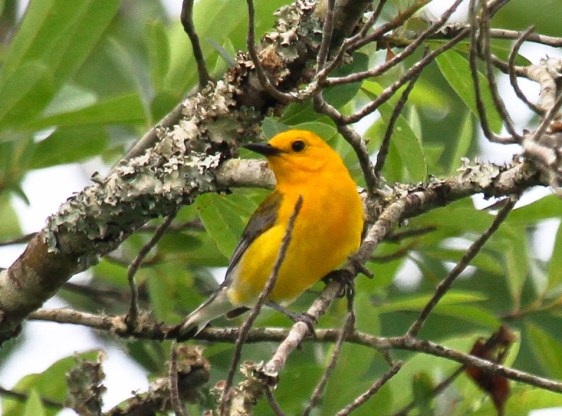
PROTHONOTARY WARBLER
After breakfast at our hotel, we loaded up our mini-van and headed south into North Carolina, with our first birding stop at Alligator River NWR. This made for a great opening round of birding and naturalizing in an expansive wetland and forest refuge. One of the most abundant birds we encountered was the Golden Swamp Warbler aka, Prothonotary Warbler. They were everywhere singing along the roadways we traveled on and several gave us very good looks. Prairie Warblers were plentiful as well singing their odd buzzy song. Both of these handsome warblers would be observed over the span of our trip when we were in forested tracts. But the birds weren’t the only exciting creatures to be seen! We had great looks that morning at a venomous Cottonmouth snake, a sharply marked Eastern Box Turtle along with numerous Yellow-bellied Sliders, our only Alligator of the tour, and on our drive out the refuge a very cooperative mama Black Bear with her two cubs! What a great start to the tour! We stopped for the first of many great seafood restaurants on Nag’s Head as we began to head out on the Outer Banks, and then headed into Pea Island National Seashore. Due to a strong wind, our birding wasn’t quite as dynamic as we explored the marshy flats and sandy beaches of the bank islands, but we still were treated to fantastic looks at birds like Least Terns, Eastern Willets, Snowy Egrets and Black Skimmers. We checked into our hotel upon reaching Hatteras, the very quaint and historical Seaside Inn, first opened in 1913! After a quick turn-around, we headed over to the Salt Ponds of the Cape Hatteras Lighthouse. This was a very birdy area, and we ended up birding here a few times over the course of the next few days. Highlights of our evening birding yielded our only Anhinga of the trip, wondrously close looks at Gull-billed Terns, American Oystercatcher and a fantastic look at a King Rail! We then headed for a seafood dinner and to bed- tomorrow the open seas beckoned!
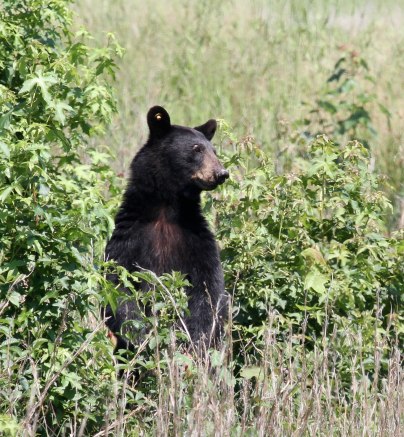
BLACK BEAR
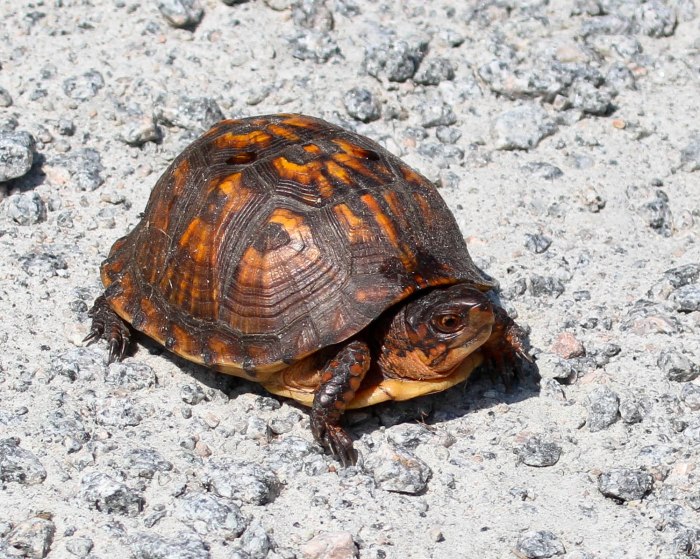
EASTERN BOX TURTLE
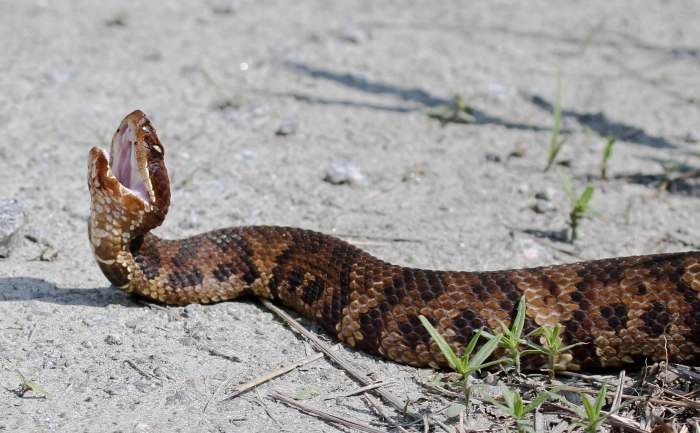
COTTONMOUTH
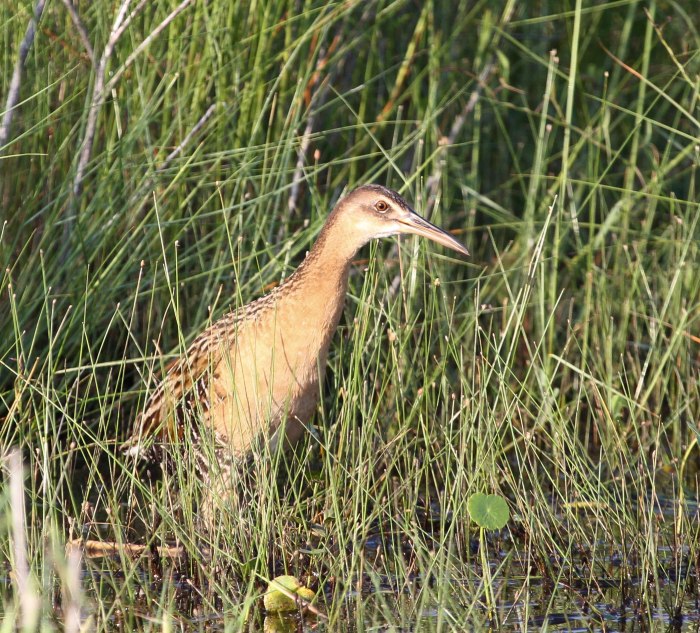
KING RAIL
Day 3, June 8: The Gulf Stream
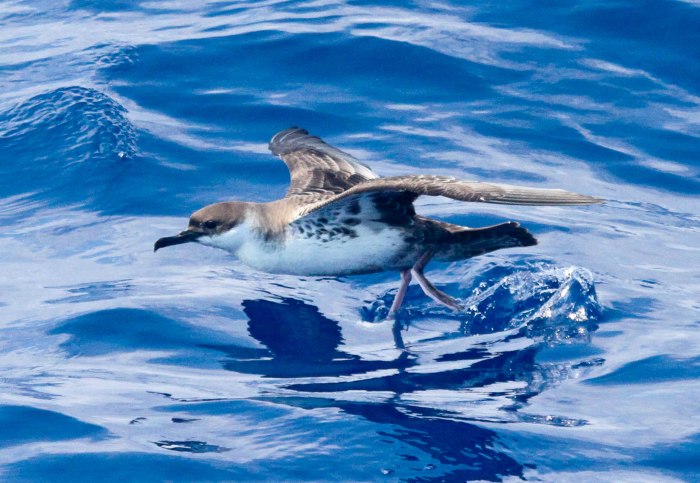
GREAT SHEARWATER
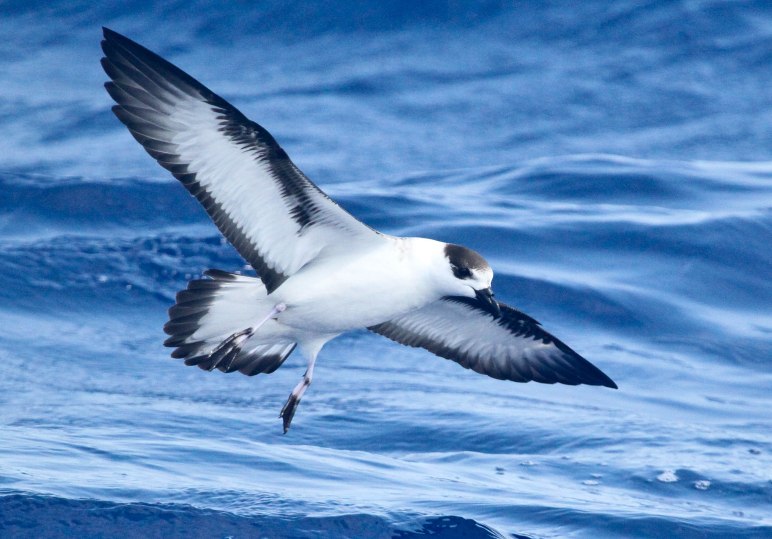
Certainly this day and the next would be the centerpieces of the tour; our back-to-back pelagic outings aboard the Stormy Petrel II, Captained by Brian Patteson and his skilled first mate Kate Southerland. In addition to their sharp eyes, there was a great team of spotters like Brian Sullivan, Nate Dias, Liam Waters and the legendary Steve Howell aboard, all but guaranteeing that no tubenose would go unspotted! We gathered on the docks before sunrise, though the melodic gurgles of Purple Martins hung in the air overhead as we loaded onto the boat. Due to the distance of the productive waters of the Gulf Stream as opposed to the cooler, less fertile inshore coastal water, we trucked out at a higher speed before slowing down and Kate would began her expert chumming techniques to lure the olfactory-talented seabirds in. A couple of distant Cory’s Shearwaters soon began to be spotted skimming over the waves and before too long we began to kick up small groups of Flying Fish, launching off the waves and gliding through the air over what seemed like impossibly long distances! After a while of travel we started to slow down and the first Wilson’s Storm-Petrels began to dance around the back of the boat gleaning bits of chum and fish oils. As they gathered, our first Gulf Stream specialty came in, a trio of Audubon’s Shearwaters, followed by several Cory’s Shearwaters and their closely related (and not yet split from Cory’s by several authorities), paler winged Scolopi’s Shearwaters. A challenge to separate in the field, but a good look or well-timed camera shot would reveal the identity of these cryptic sister taxa. However the bird that truly steals the scene every time it appeared was the Black-capped Petrels. Today they were plentiful and made several close runs past the boat, delighting the photographers and allowing others completely satisfying bare-eyed looks at these ocean nomads. And the day pretty much went on like this for hours and hours of enjoying the various seabirds hauling past the boat. Activity died down a bit in the afternoon, but we were treated to a few pods of Pilot Whales “logging” (loafing along the surface) at close range. On our way back inshore towards the end of the day, we encountered a pair of Parasitic Jaegers quickly cruising past the boat. Then much to my pleasant surprise, everyone on the tour wanted to go back out to the lighthouse for some evening birding. More birding after twelve hours of bouncing around on the ocean? Yes please! These guys were birding tigers and I am always game to lift binoculars. Another dinner of delicious seafood was had to end the day.
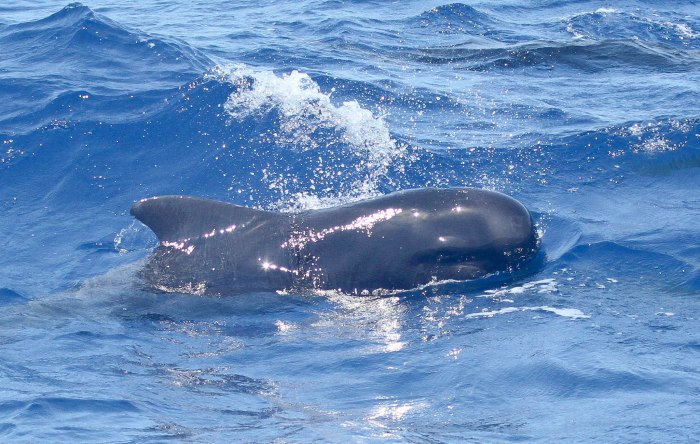
PILOT WHALE
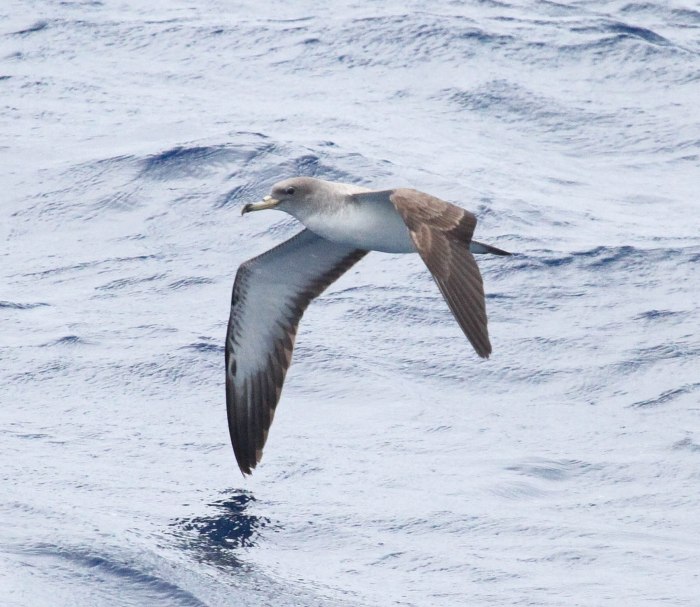
CORY’S SHEARWATER
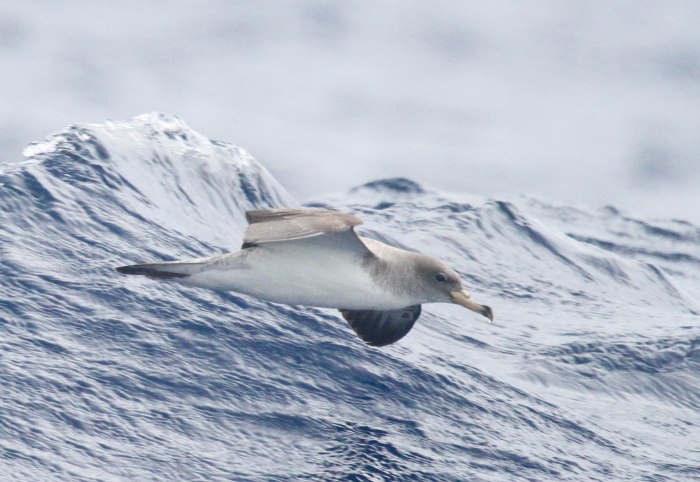
SCOLOPI’S SHEARWATER
Day 4, June 9: The Gulf Stream (part two)
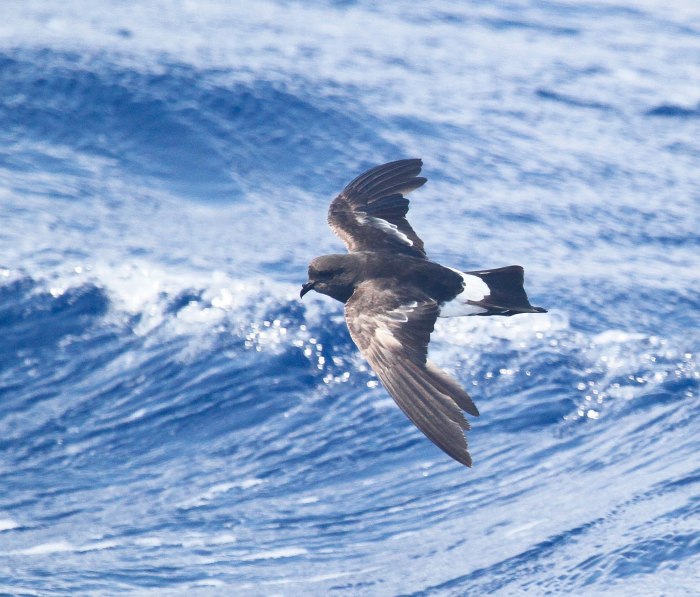
WILSON’S STORM-PETREL
“Every day is different” is the pelagic veteran’s motto, and today certainly fell in line with that old adage. A vivid red sunrise foretold the rain we would spend most of the morning in. Not too many seabirds on the haul out to the Gulf Stream this morning in the rain, but we did kick up our only Pomarine Jaeger of the trip. Unfortunately the bird just pulled away from us in the rain and did not return. But after a couple hours of travel and chumming, we began to develop a pretty serious flock of Storm-Petrels behind the boat. As with yesterday, the Storm-Petrels were mostly Wilson’s, with a few Leach’s and Band-rumped Storm-Petrels mixed in. But today, the rarer Storm-Petrels were a little more cooperative allowing for better studies of these similarly-looking species. Very exciting was a individual Band-rumped Storm-Petrel that was in a fresh plumage as opposed to the one’s we had been seeing the previous day that were in active wing-molt. This was a Madrian Band-rumped, a different race/population/cryptic species that bred and molted on a different schedule then the more expected Grant’s Band-rumped Storm-Petrel. As opposed to yesterday, we did not see as many of those handsome Black-capped Petrels, but our experiences with Shearwaters were quite excellent as many Great, Cory’s and Scolopi’s Shearwaters joined the Storm-Petrels behind the boat feeding vigorously. We were treated to some great looks at Audubon’s Shearwater in the afternoon and then late in the day, a Manx Shearwater came in for a great looks for everyone. So nice to get one more pelagic species for our trip! Upon returning to dock, we went back to our Inn for a bit of respite and then headed out for another great seafood dinner before a bit of evening birding. Not letting two days on the open ocean slow anybody down, we headed out to a nearby piney dune area to try for Chuck-wills widows, of which we had several! There were many individuals singing away and we got a pretty great look at one flying low across the trees and road in front of us. Another fantastic day on the books!
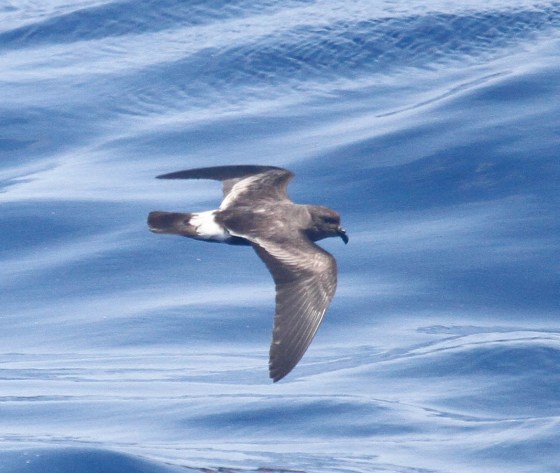
“GRANT’S” BAND-RUMPED STORM-PETREL
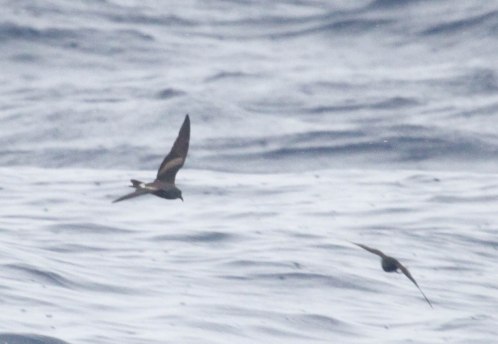
LEACH’S STORM-PETREL
Day 5, June 10: Hatteras to Atlantic Beach (via multiple ferries!)
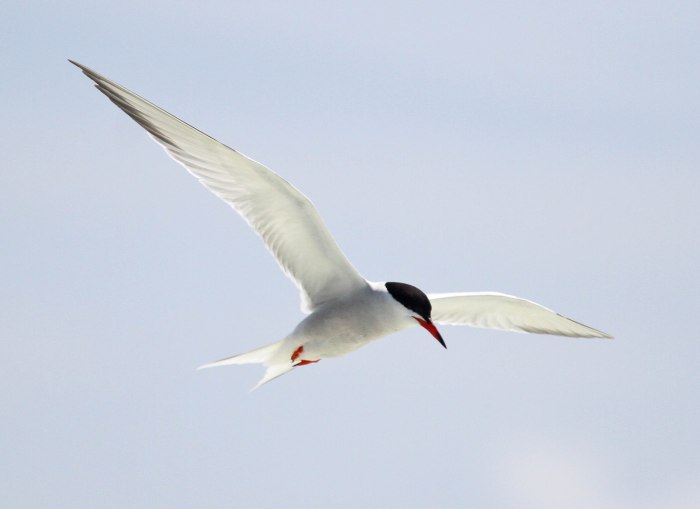
COMMON TERN
Today was a fun one, light on vigorous birding, but we covered a lot of miles. We slept in a bit to a more reasonable 6am breakfast start time, and then headed back out one last time to the Cape Hatteras lighthouse. Again, we dipped on the few rarities that had been bouncing around, but we did get a few new trip birds, a couple of which we would not see again and one of which was a somewhat of a rarity of our own finding. That was a delightful Wilson’s Plover, an uncommon breeder of the Carolina coast and typically very localized. This one gave us all a nice look and even a shot or two before it took off, not to be seen again. Some other new birds for the trip included our first Little Blue Heron, Blue Grosbeak and our only Orchard Oriole of the trip. We then headed off to catch our first car ferry to Okracoke Island and that ended up being a real treat. We first spotted an active Tricolored Heron foraging in the surf on a distant sandbar and as the ferry chugged out across the water, we generated a good flock of terns feeding behind us, Common, Royal and Sandwich, all giving us great looks and fantastic photo opportunities. Getting our booking for the ferry off of Okracoke was a little bit maddening with a poorly arraigned (and described!) sign-up system, but it gave us the time we needed to work this delightful salt marsh for a couple of hours as well as treat ourselves to great seafood lunch. We had two main targets here on Okracoke, and my goodness did we ever get great looks at both of them- secretive marsh birds no less! These birds of course being the sublime Seaside Sparrow, of which several teed up rather nicely for us, “singing” away their wispy burn of a song, and a really awesome experience with a Clapper Rail, providing some fun looks as a few others called from further out! Really just a treat to have and surprisingly in the middle of the afternoon too! It was then time to get on our next ferry and chug over to Cedar Island. Once there we spent some time looking for a reported Common Eider with no luck, but we did see our first Glossy Ibis, Redhead and Forster’s Terns of the trip. Then as we drove off Cedar Island in the early evening light across an extensive salt marsh, one of the tour participants made the luckiest snag ever and spotted a Least Bittern on the edge of the reeds from the van as we were driving highway speeds! Color me impressed! We all piled out and got great looks at it as well as spotting a few others in flight. We had been trying for this bird several times now, and I thought we were never going to see one, only to end up having the best looks I’ve had of a Least Bittern in years and years!
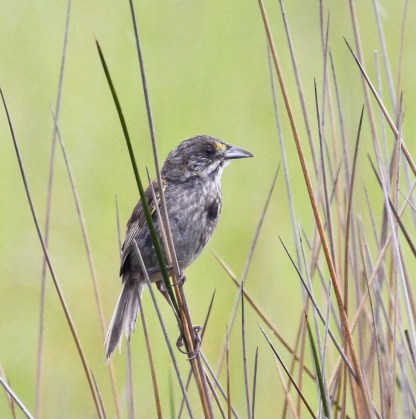
SEASIDE SPARROW
Day 6, June 12: The Pineywoods! (Croatan National Forest)
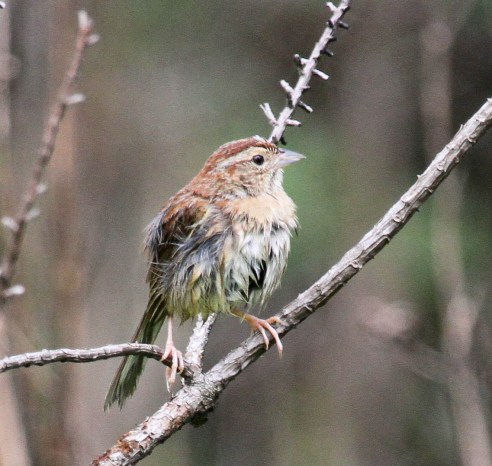
BACHMAN’S SPARROW
Today found us in embarking on the other big half of this tour, exploring the extensive coastal plain’s pineywoods forests. We rolled in a little bit after breakfast and birdsong was in full tilt! After days at sea or at least along the coast, it was a treat to be in the woods looking for songbirds. Prothonotary Warblers were singing frequently, as were lots of Common Yellowthroats and Pine Warblers, along with a few Yellow-throated Warblers and Prairie Warblers. Joining them were lots of Indigo Buntings, Brown Thrashers, Blue Grosbeaks, Eastern Towhees, Carolina Chickadees AND Carolina Wrens, Lots of Eastern Wood-Pewees and Great Crested Flycatchers and several Yellow-billed Cuckoos all contributed to the morning cacophony and eventually all showed themselves to us for some delightful looks. Northern Bobwhites were calling frequently and though it was a bit of a struggle to lay eyes on them, eventually persistence paid off. One of the big three pineywood speciatily birds did not take long to find and soon we were enveloped in a flock of Brown-headed Nuthatches, their squeaky calls always delightful to hear. Digging up specialty bird number two took a bit more work, but eventually we were treated to several great looks at Bachman’s Sparrow, their plaintive whistle ringing out through the pine savannahs. We saw several other non-avian species of interest today as well; another Eastern Box Turtle was a treat, and several Common Mud Turtles were seen stalking around. A Black Rat Snake was a fun sight, and mutually terrifying for both was when one of the participants surprised a large Red-bellied Water Snake out of a puddle in the trail! Of course the big target today was Red-cockaded Woodpecker, we easily found several of the trees they used, marked by the USFWS for monitoring, but try as hard as we did, and tallying in five other species of woodpeckers, including several handsome Red-headed Woodpeckers, we simply did not find a Red-cockaded today. We turning up a few goodies along the way at least; a singing Black-throated Green Warbler was the local subspecies named Wayne’s Warbler, a couple of Summer Tanagers showed well, both Northern Parula and Acadian Flycatcher were discovered at the same stream crossing, and a fantastic look at a Worm-eating Warbler was had. But what ended up being the bird of the day was a great look at a Swainson’s Warbler, a big target bird for everyone, and one that truthfully I had some doubts that we would get one, or at least likely hear one, but not get the looks we desired from such a denizen of the thick underbrush. Boy, were my fears unfounded, as that bird gave us a real show before slipping back into the woods. What a success and with that, we headed out for a late lunch and a break from the ever increasing hot temperatures that had been building all day. After a long break made longer by quite the late afternoon rainstorm, we didn’t get back out till nearly dusk, were due to the damp conditions, bird life was pretty subdued. But between the mist and all the singing frogs, the evening was rather enchanting as we crept along under the pines. A distant bear crossed the road in front of us, and we ended up getting a nice look at a singing Chuck-wills-widow, posing in our flashlights.
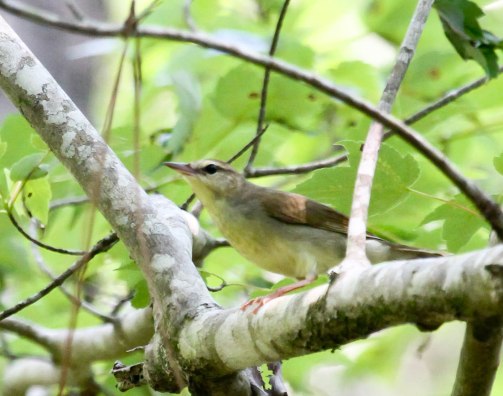
SWAINSON’S WARBLER
Day 7, June 12: Atlantic Beach to Norfolk
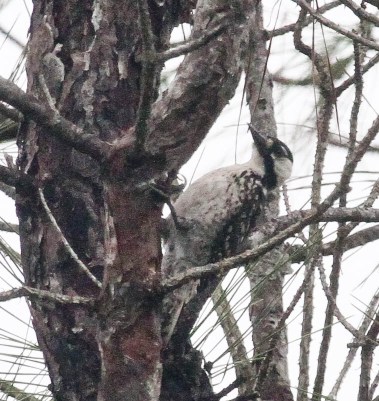
RED-COCKADED WOODPECKER
Our final day of the tour! Bittersweet as it truly was such a great group of people to travel and adventure with, but all good things must come to an end right? So for our final morning, there really was only one thing to do, return to the Croatan National Forest for one final attempt on the Red-cockaded Woodpecker. We felt good about it, we had scouted out some likely spots to work for the morning, and… got nothing! We tried and tried and got no joy. But then a local, not even a birder came driving down the road and upon chatting with us, in true southern hospitality fashion, led us several miles down a side spur road that he walks where Fish & Wildlife employees had an active nest! So now thanks to his kindness, we were at the spot! Stakeout time! All we had to do was wait. And wait. And wait some more… But no woodpecker ever came to the nest; no babies could be heard calling. Could they have fledged by now? We started to wander the road, chasing down every little off-sounding Nuthatch toot we heard, and finally one of the participants had a Red-cockaded Woodpecker fly in! We gathered all our folks together, zipped down to the spot, and after a few tense minutes, were able to relocate the woodpecker, where it eventually calmed down to our presence and allowed for some thrilling looks and pictures! We did a little more birding back near our hotel, trying to see if we could find a Painted Bunting at Fort Mason State Park, but between the heat, and the fact we were all kind of physically and emotionally spent from our last morning in the Pineywoods, we did not linger long, and went to go check out and do the afternoon long drive back up to Norfolk Virginia for our farewell dinner. It was truly a wonderful week with a great group of funny, charming clients and everyone seemed very satisfied with their experience. Not bad for a brand new tour and I’m already looking forward to next year’s run!
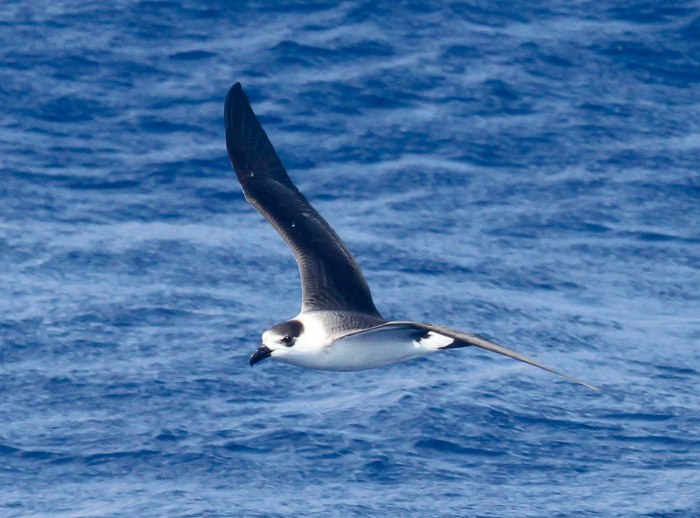
BLACK-CAPPED PETREL
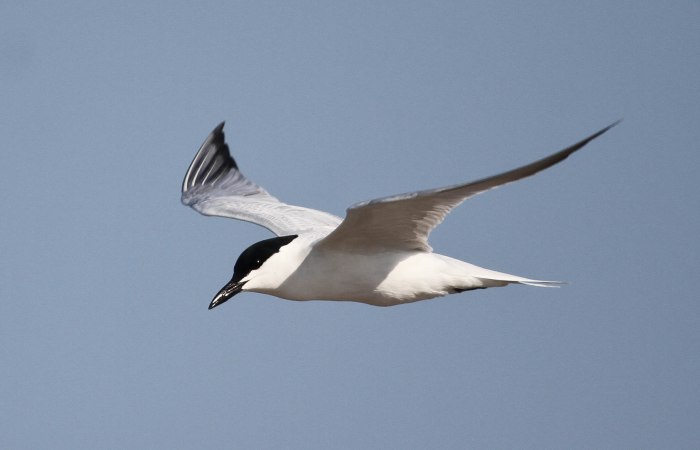
GULL-BILLED TERN
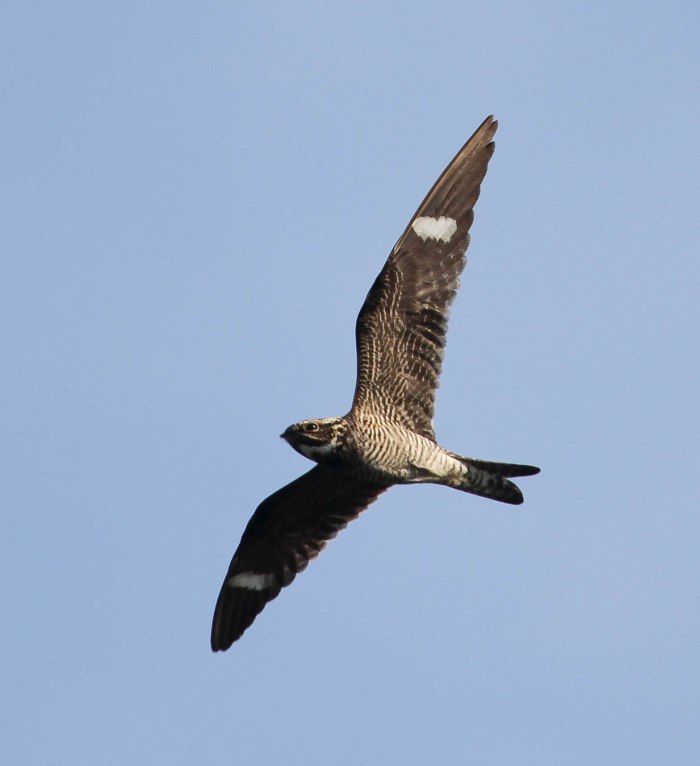
COMMON NIGHTHAWK
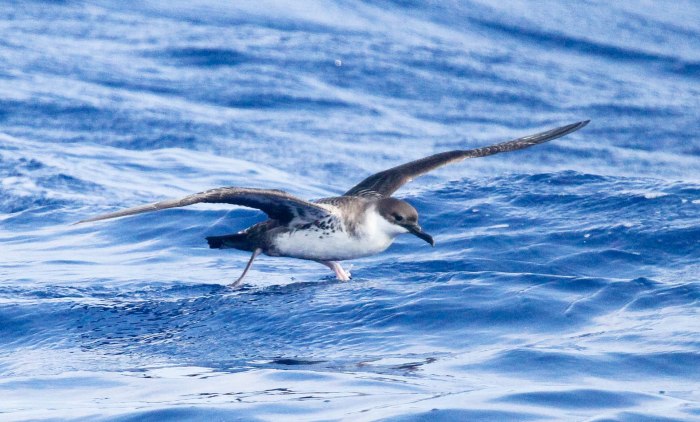
GREAT SHEARWATER
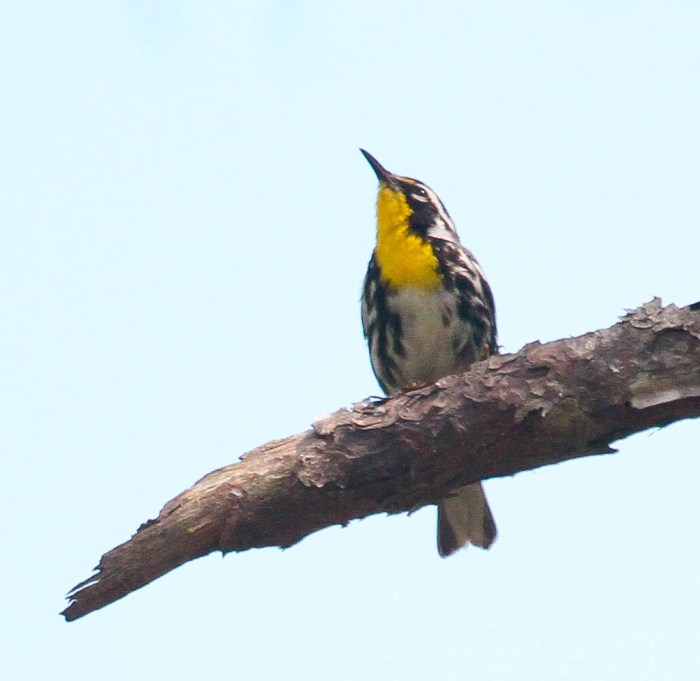
YELLOW-THROATED WARBLER
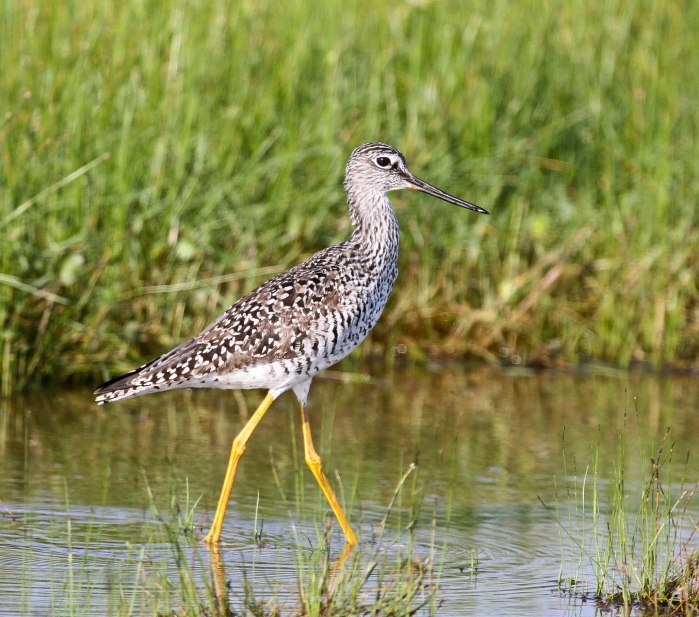
GREATER YELLOWLEGS
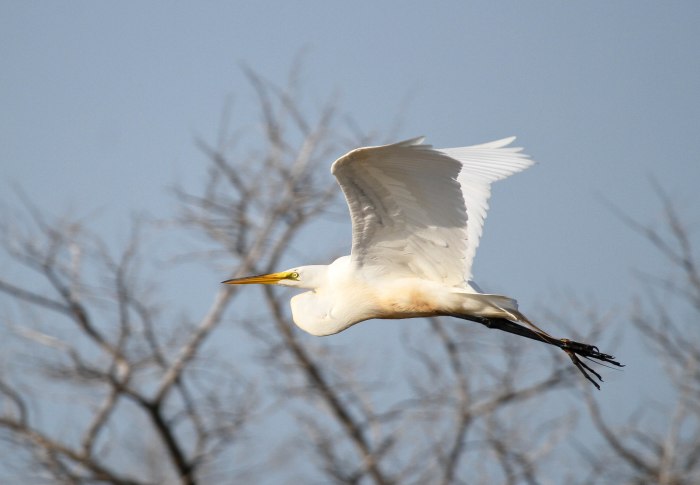
GREAT EGRET
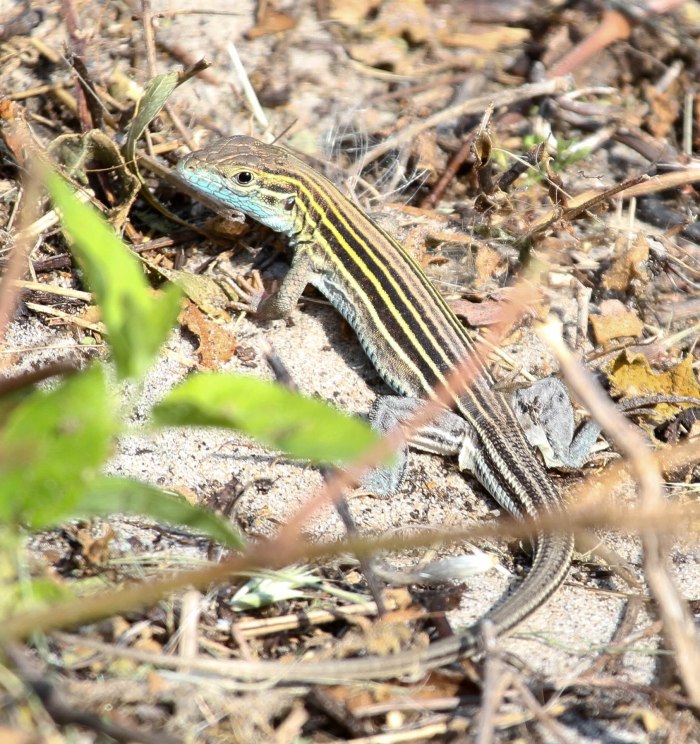
SIX-LINED RACERUNNER
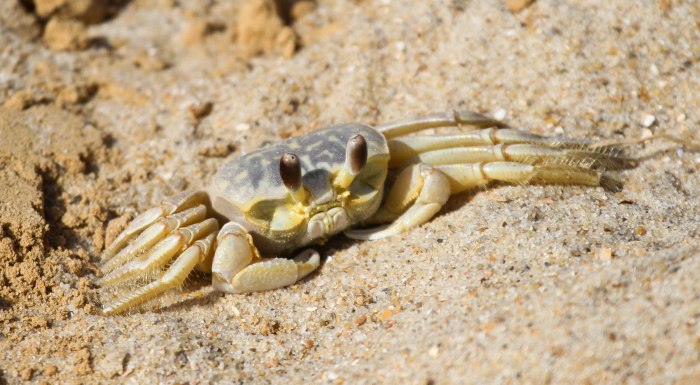
CRAB SPECIES
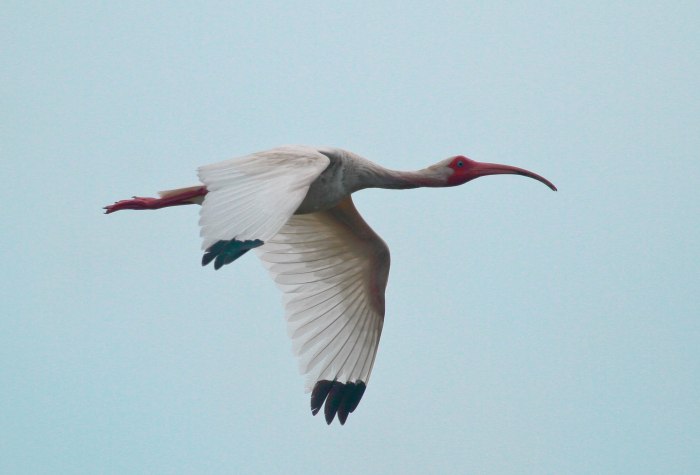
WHITE IBIS
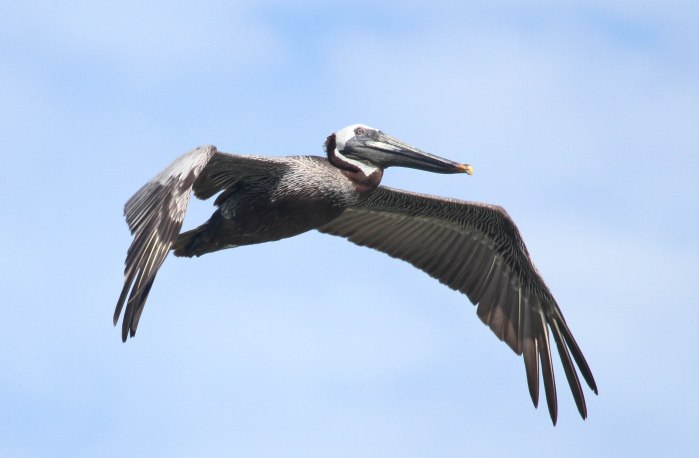
BROWN PELICAN
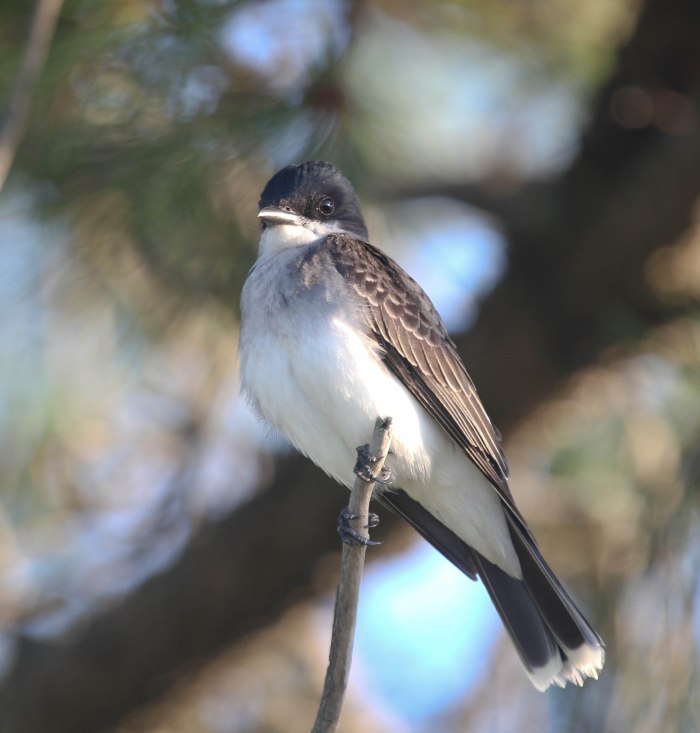
EASTERN KINGBIRD
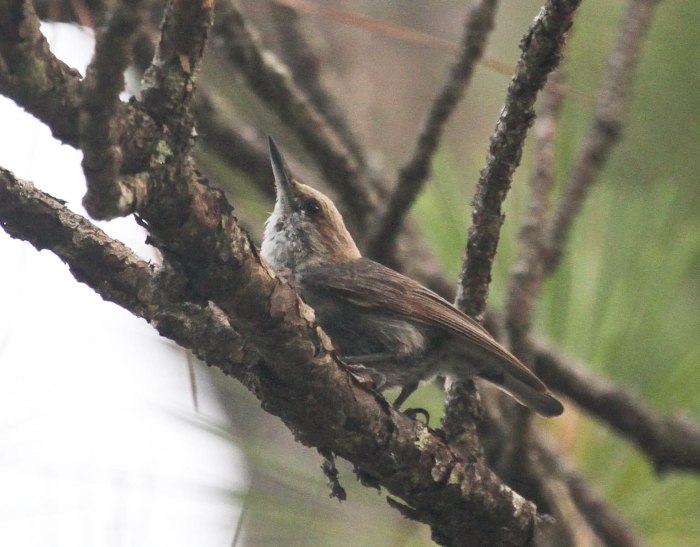
BROWN-HEADED NUTHATCH
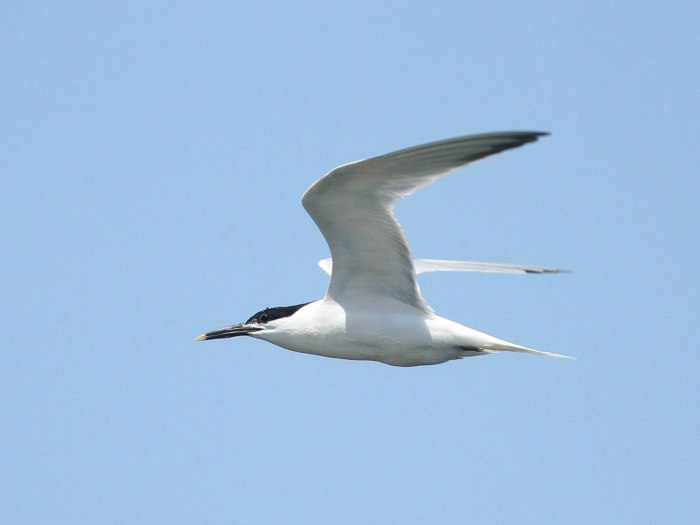
SANDWICH TERN
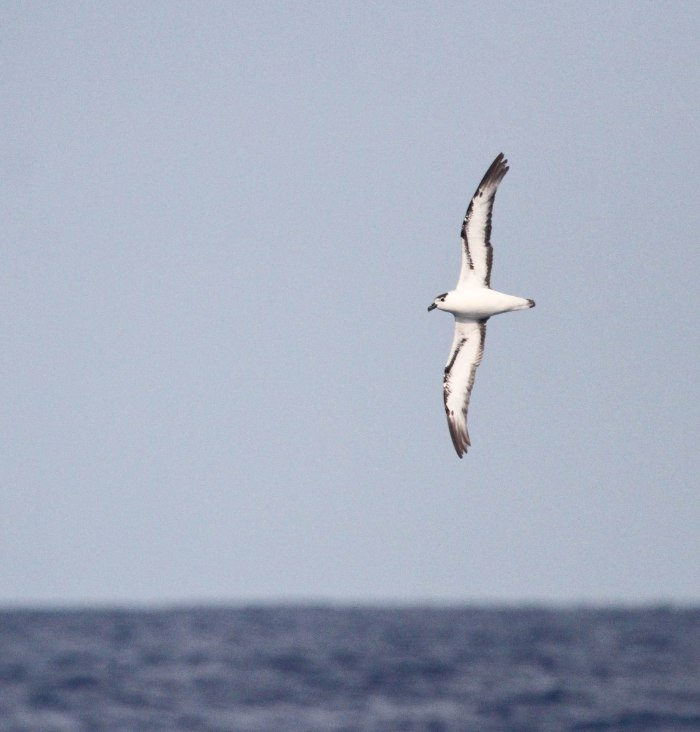
BLACK-CAPPED PETREL (WHITE-FACED FORM)
SPECIES LIST:
| Canada Goose |
| Gadwall |
| American Black Duck |
| Mallard |
| Redhead |
| Ruddy Duck |
| Northern Bobwhite |
| Wild Turkey |
| Black-capped Petrel |
| Cory’s Shearwater |
| “Scopoli’s” Cory’s Shearwater |
| Great Shearwater |
| Manx Shearwater |
| Audubon’s Shearwater |
| Wilson’s Storm-Petrel |
| “Grant’s Band-rumped Storm-Petrel |
| “Maderian” Band-rumped Storm-Petrel |
| Anhinga |
| Double-crested Cormorant |
| Brown Pelican |
| Least Bittern |
| Great Blue Heron |
| Snowy Egret |
| Little Blue Heron |
| Tricolored Heron |
| Cattle Egret |
| Green Heron |
| Yellow-crowed Night-Heron |
| White Ibis |
| Glossy Ibis |
| Black Vulture |
| Turkey Vulture |
| Osprey |
| Red-shouldered Hawk |
| Red-tailed Hawk |
| King Rail |
| Clapper Rail |
| Virginia Rail |
| Black-necked Stilt |
| American Oystercatcher |
| Black-bellied Plover |
| Wilson’s Plover |
| Semipalmated Plover |
| Killdeer |
| Marbled Godwit |
| Ruddy Turnstone |
| Semipalmated Sandpiper |
| Short-billed Dowitcher |
| Greater Yellowlegs |
| “Eastern” Willet |
| Pomarine Jaeger |
| Parasitic Jaeger |
| Laughing Gull |
| Ring-billed Gull |
| Herring Gull |
| Great Black-backed Gull |
| Least Tern |
| Gull-billed Tern |
| Caspian Tern |
| Black Tern |
| Common Tern |
| Forster’s Tern |
| Royal Tern |
| Sandwich Tern |
| Black Skimmer |
| Rock Pigeon |
| Eurasian Collared-Dove |
| Mourning Dove |
| Yellow-billed Cuckoo |
| Great Horned Owl |
| Barred Owl |
| Common Nighthawk |
| Chuck-will’s Widow |
| Chimney Swift |
| Ruby-throated Hummingbird |
| Red-headed Woodpecker |
| Red-bellied Woodpecker |
| Downy Woodpecker |
| Hairy Woodpecker |
| Red-cockaded Woodpecker |
| Northern Flicker |
| Pileated Woodpecker |
| American Kestrel |
| Eastern Wood-Pewee |
| Acadian Flycatcher |
| Great Crested Flycatcher |
| Eastern Kingbird |
| Red-eyed Vireo |
| Blue Jay |
| American Crow |
| Fish Crow |
| Purple Martin |
| Barn Swallow |
| Carolina Chickadee |
| Tufted Titmouse |
| Brown-headed Nuthatch |
| Carolina Wren |
| Blue-gray Gnatcatcher |
| Eastern Bluebird |
| American Robin |
| Gray Catbird |
| Brown Thrasher |
| Northern Mockingbird |
| European Starling |
| Cedar Waxwing |
| Ovenbird |
| Worm-eating Warbler |
| Pronthonotary Warbler |
| Swainson’s Warbler |
| Common Yellowthroat |
| Northern Parula |
| Pine Warbler |
| Yellow-throated Warbler |
| Prairie Warbler |
| “Wayne’s” Black-throated Green Warbler |
| Bachman’s Sparrow |
| Seaside Sparrow |
| Song Sparrow |
| Eastern Towhee |
| Summer Tanager |
| Northern Cardinal |
| Blue Grosbeak |
| Indigo Bunting |
| Eastern Meadowlark |
| Orchard Oriole |
| Red-winged Blackbird |
| Brown-headed Cowbird |
| Common Grackle |
| Boat-tailed Grackle |
| House Finch |
| House Sparrow |
| Pilot Whale |
| Bottlenose Dolphin |
| Eastern Woodrat |
| Nutria |
| Muskrat |
| Gray Squirrel |
| Eastern Cottontail |
| Black Bear |
| White-tailed Deer |
| Yellow-bellied Slider |
| Painted Turtle |
| Snapping Turtle |
| Common Mud Turtle |
| Eastern Box Turtle |
| Black Rat Snake |
| Black Racer |
| Eastern Garter Snake |
| Red-bellied Water Snake |
| Cottonmouth |
| Green Anole |
| Six-lined Racerunner |
| Alligator |
| Narrow-mouthed Toad |
| Eastern Toad |
| Chorus Frog |
| Bullfrog |
| Monarch |
| Red Admiral |
| Giant Swallowtail |
| Black Swallowtail |
| Pipevine Swallowtail |
| Banded Hairstreak |
| Vicroy |
| Southern Oak Hairstreak |
 Borealis Birding